Spend The Perfect Half-Term In Venice
By James McLaren
Venice rewards a certain lack of urgency. You walk instead of rushing, linger instead of leaving, and dress as though every narrow calle might eventually lead somewhere worth being seen. The Manhood team sent Creative Director James McLaren to Venice for a few days away. From what to pack and how to get around, to where to find a good spritz, this is Venice through his eyes.
Book flights early, pack late, get to the airport on time. I’ve discovered that this is pretty much my routine when it comes to breaks away. And, somehow, it works.
Venice has been on my bucket list for as long as I can remember. There is something about the city that feels almost too cinematic to be real; a place built around water, disappearing alleyways, grand palazzos and enough mystery to make you feel as though something interesting is about to happen around the next corner.
Perhaps my expectations were always going to be slightly unrealistic. My introduction to Venice, after all, was A Haunting in Venice. Add a little Agatha Christie to an already mysterious city and suddenly every unmarked door looks suspicious.
As autumn starts to set in, the leaves change, the nights become darker and the temperature drops, there is something rather appealing about holding onto summer for a little longer. Even if it is only for a few days.
What to pack for Venice
The question, as always, is what to wear.
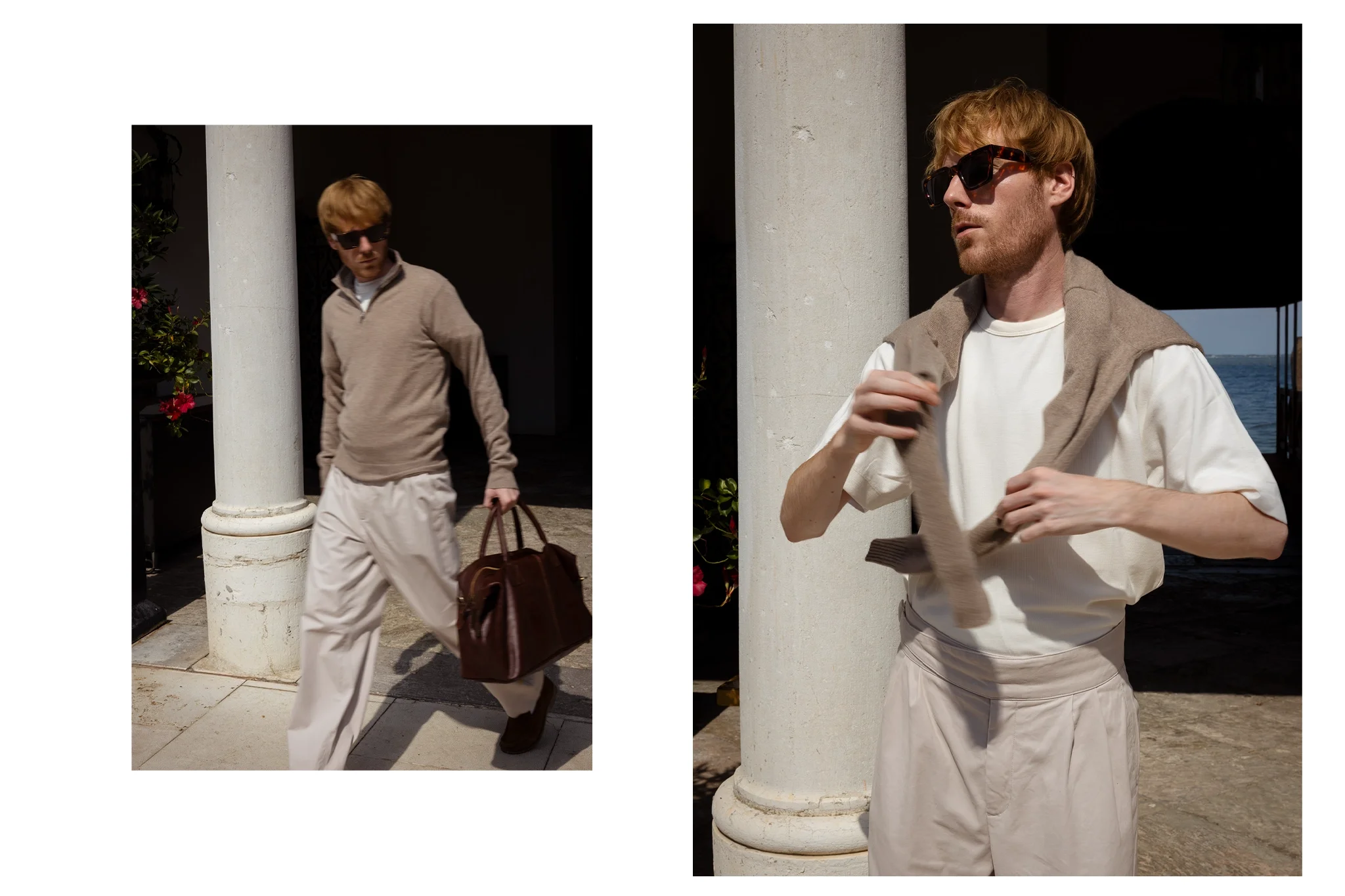
Venice in early autumn is one of those places where layering actually makes sense. Mornings can be cool, afternoons surprisingly warm and evenings call for something a little heavier. I wanted clothes that could work equally well walking through the city, sitting down for lunch or heading out for drinks later without requiring an entire suitcase.
I headed to John Lewis before leaving – always a fairly safe bet when I need to find a few things without spending an entire afternoon searching for them – and picked up some new pieces alongside a John Lewis (Made in Italy, of course) Leather Holdall in brown.
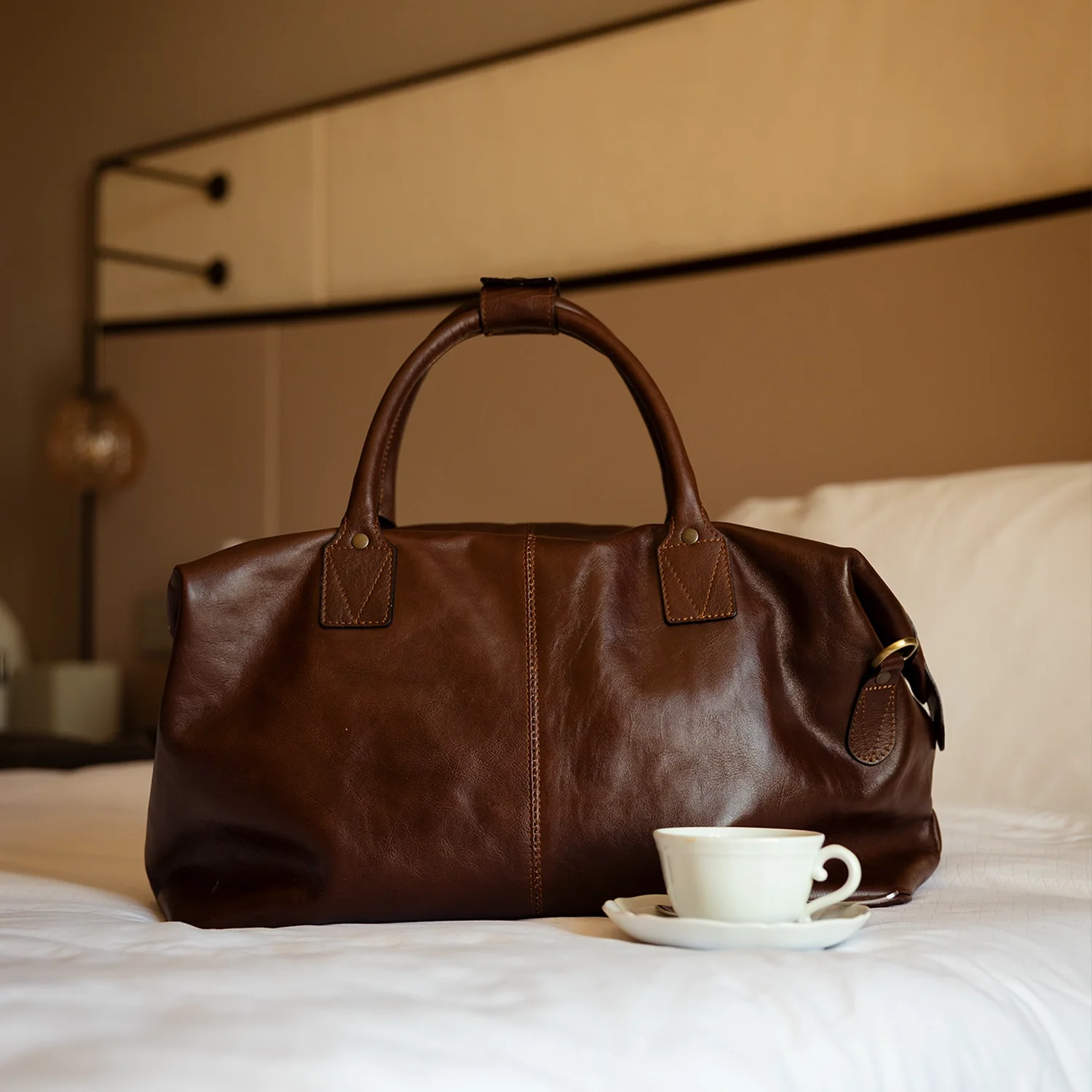
It turned out to be exactly the sort of bag I wanted for the trip: practical enough for a short break, but smart enough that it didn't look like I was heading for a weekend of camping. Made in Florence from vegetable-tanned leather, it has that slightly worn-in quality that only gets better with time. The kind of holdall that should look better after a few trips rather than worse.
Arriving in Venice
I flew into Venice Marco Polo Airport, and this is where the city starts to feel different.
Rather than stepping straight into a taxi queue or onto a bus, you make your way towards the water. There are water transport options directly from the airport, including Alilaguna and private water taxis, so even the journey into the city feels like part of the holiday.
The sun was starting to set when I arrived, throwing hues of orange, gold and blue across the lagoon. If there was ever a time to grab a window seat, this was it.
With the window open, the splash of sea air coming in and Venice gradually appearing in the distance, it felt less like arriving at a hotel and more like the beginning of an adventure.
And that is probably the first thing I would tell anyone visiting Venice: don't rush the arrival.
The St. Regis Venice
For my stay, I was based at The St. Regis Venice.
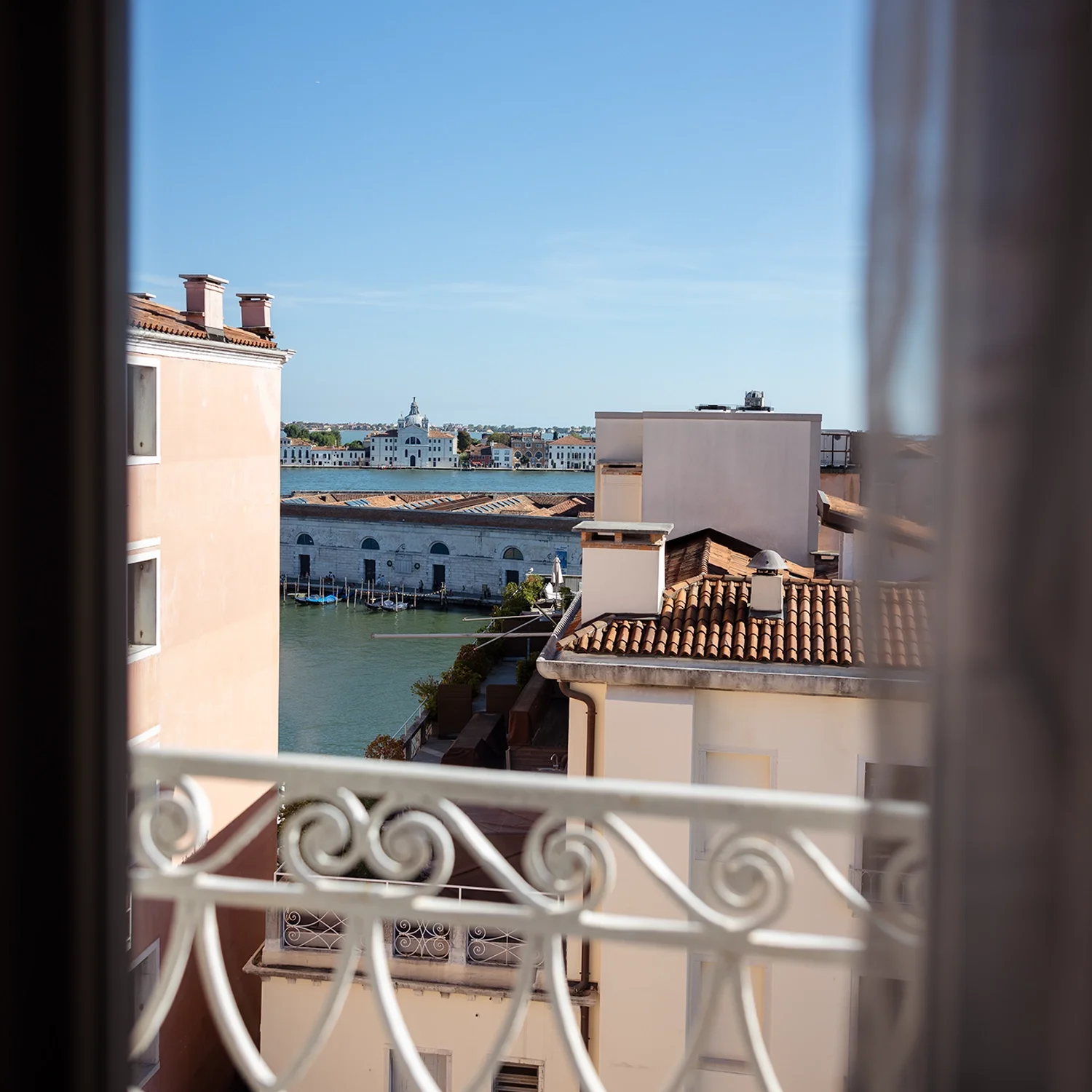
Sitting directly on the Grand Canal, with views towards some of Venice's most recognisable landmarks, the hotel occupies the sort of position that makes you understand why people fall slightly in love with this city. The building combines historic Venetian character with a more contemporary approach to luxury, and there is something particularly good about being able to come back from a day of wandering and simply sit for a while.
Sometimes a hotel needs to be more than somewhere to sleep. In Venice, where you can spend hours walking, crossing bridges and generally losing track of where you are, having somewhere calm to return to becomes part of the experience.
The St. Regis has that feeling. It is a place to slow down, have a drink, look out across the Grand Canal and remind yourself that you are, in fact, in Venice. The property has been in this privileged position for more than 150 years and today combines that history with 124 rooms and 39 suites.
Getting around
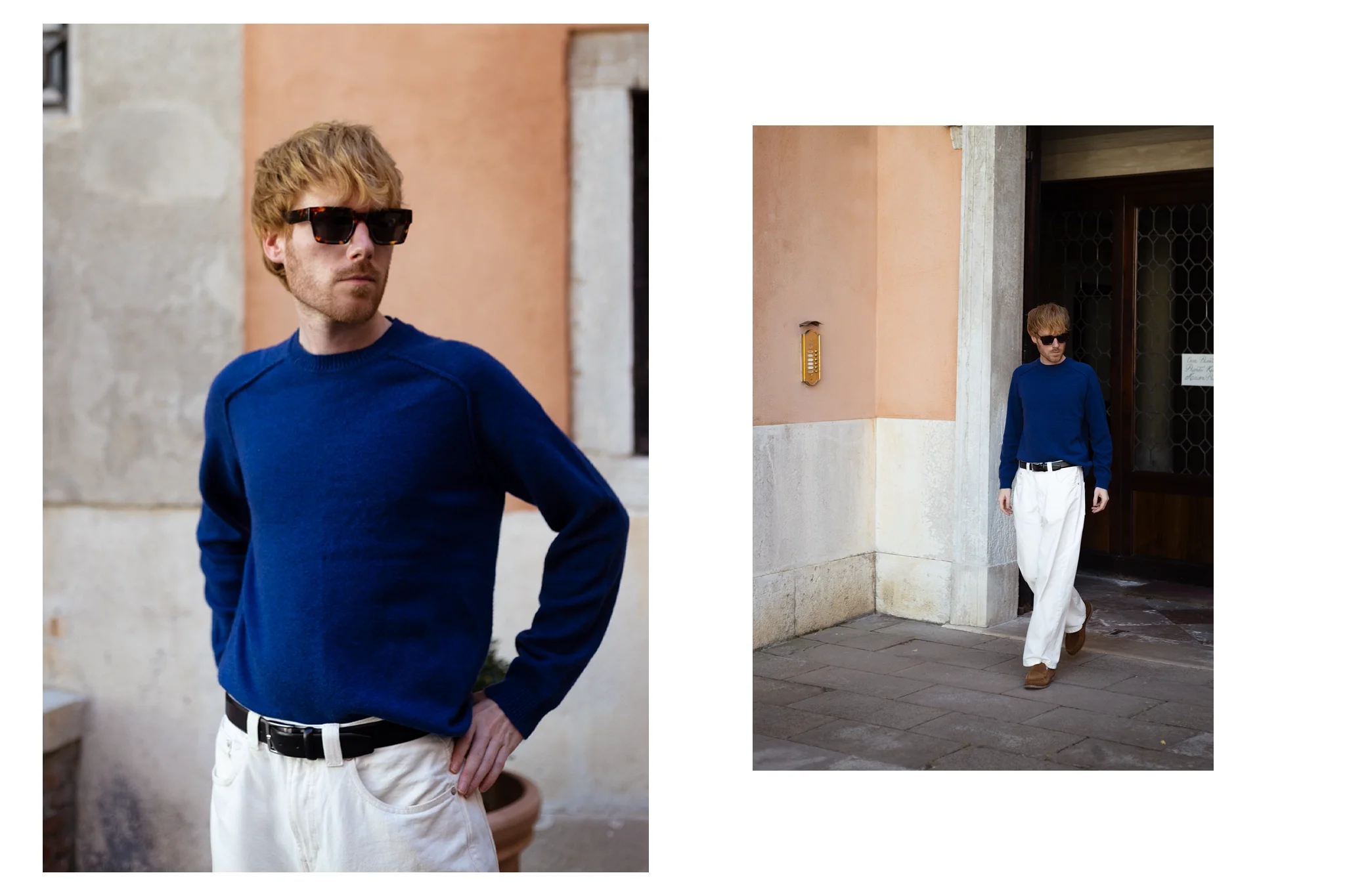
Once settled, it was time to discover the city.
Walking is obviously the best way to experience Venice. Getting lost is practically part of the itinerary. But the vaporetti – Venice's water buses – are invaluable when you want to get further afield.
And here is the advice I wish someone had given me before I arrived: buy a multi-day ACTV pass.
A standard ACTV ticket currently costs €9.50 for 75 minutes, while the 24-hour pass is €25, the 48-hour pass €35, the 72-hour pass €45 and the seven-day pass €65. The passes cover the ACTV waterborne network and are particularly useful if you are planning to visit the islands.
You can, of course, buy individual journeys, but if you're going to be jumping on and off boats throughout the day, the maths quickly starts to work against you.
The vaporetto is also one of the best ways to see Venice from another perspective.
Take the trip to Lido
One of my favourite things about Venice was discovering that the city doesn't really end at Venice.
Take a vaporetto over to Lido and the atmosphere changes almost immediately. It is still Venice, but with more space, more greenery and the Adriatic on the other side.
Lido is a long, narrow island separating the Venetian Lagoon from the Adriatic Sea, with beaches, Art Nouveau architecture and quieter stretches away from the intensity of the historic centre. There are free beaches as well as established bathing areas, and Alberoni in particular offers a more natural, less polished side to the island.
Even if you aren't visiting in beach weather, it is worth the trip simply to see another side of Venice.
San Michele
Another trip worth making is to Isola di San Michele, Venice's cemetery island, sitting between the historic centre and Murano.
It is one of those places that sounds slightly strange when you put it on a holiday itinerary, but in Venice it makes perfect sense.
The cemetery dates back to the Napoleonic period, when burials were moved outside the city for hygiene reasons. Today it is a beautiful, atmospheric place of cypress trees, brick walls, chapels and historic graves. Among those buried here are writers and artists including Ezra Pound, Igor Stravinsky and Joseph Brodsky.
It is quiet in a way that much of central Venice isn't. No crowds competing for the perfect photograph, no one rushing across a bridge. Just water, stone, trees and an extraordinary amount of history.
When in Venice, have a spritz
There is always time for a spritz in Italy.
Some people will automatically reach for Aperol. Others will argue for Campari. But if you are in Venice, I would suggest trying Select.
Born in Venice in 1920, Select is made using 30 botanicals, including juniper berries and rhubarb root. The result sits somewhere between the sweeter Aperol and the more bitter Campari, with a slightly more herbal, grassy and spicy character.
The traditional Venetian serve is Select, Prosecco, soda and a green olive.
It is difficult to imagine a better drink for watching Venice go by.
Dress for the weather, not the forecast
One of the unexpected joys of Venice in autumn was how easy it was to dress.
A linen shirt still worked during the day, but adding an overcoat as the temperature dropped gave everything a slightly more considered feel. It is probably the closest I get to packing intelligently: pieces that can be layered rather than outfits designed for one very specific weather condition.
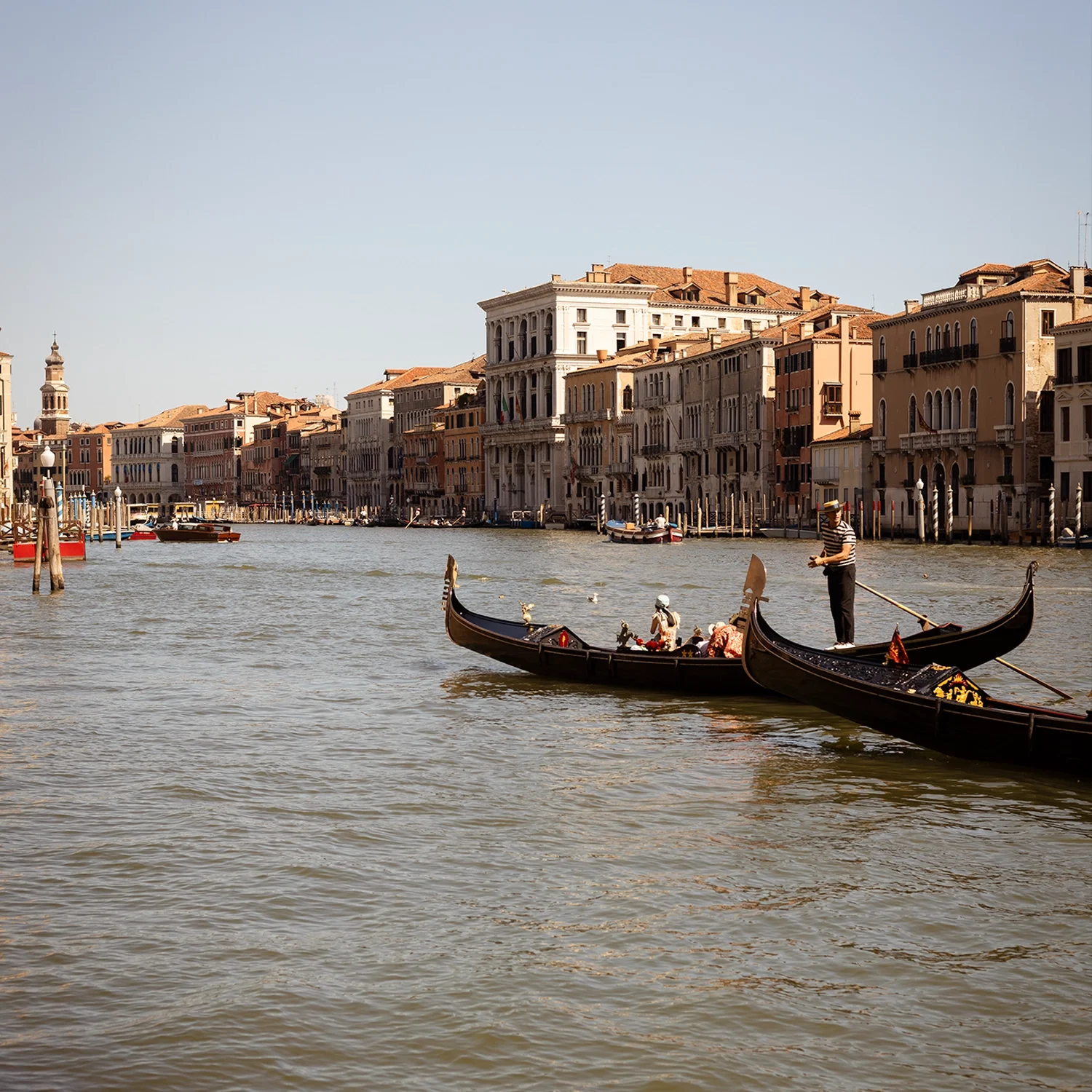
On one particular afternoon, that meant linen shirt, overcoat and comfortable shoes before heading across the lagoon in a gondola.
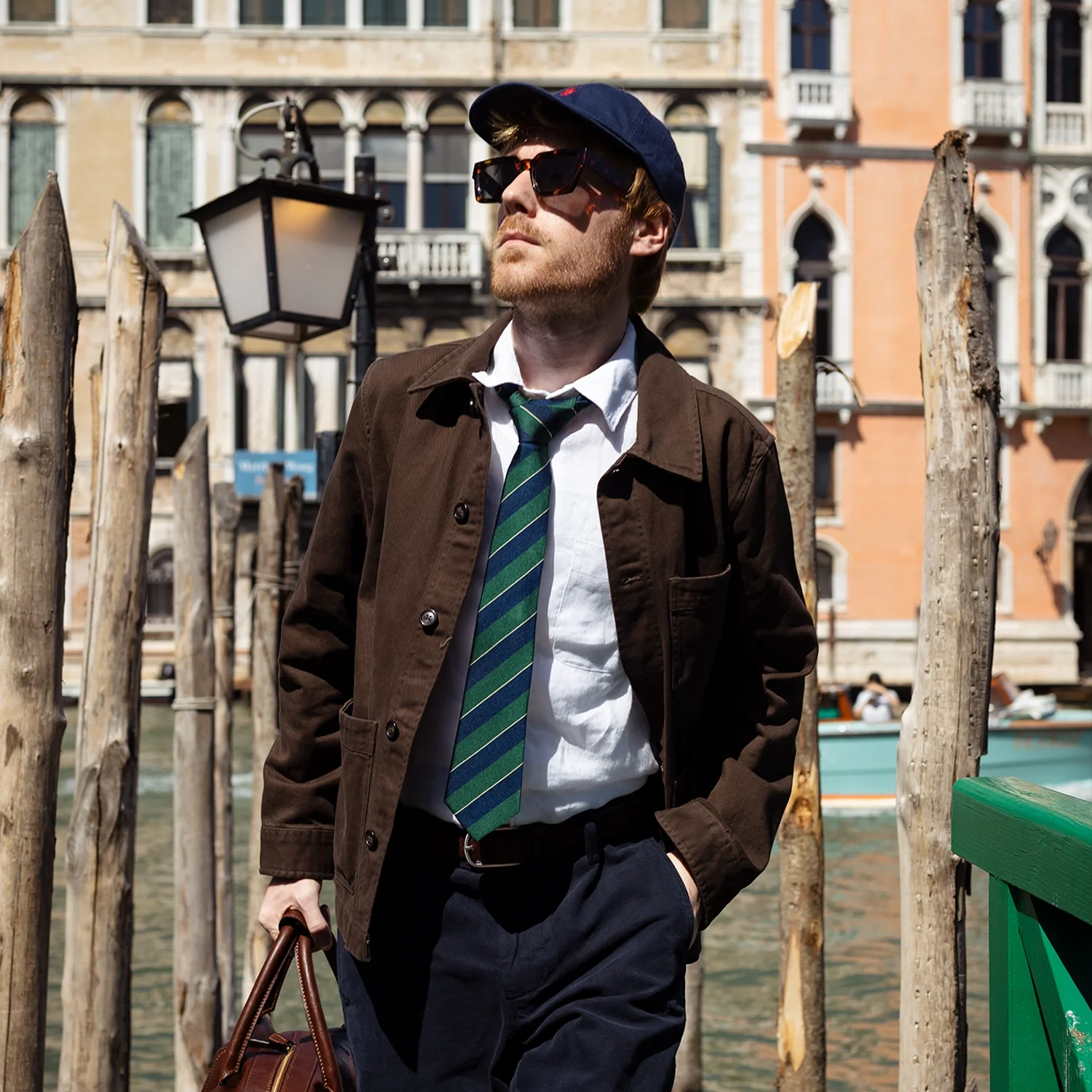
A small warning here: come prepared with cash. I was told to expect gondola journeys to be cash-only, and it is not the sort of moment when you want to discover you have left your wallet somewhere in the hotel.
The city's official gondola tariff is currently €90 for a 30-minute daytime ride and €110 for a 35-minute evening ride, charged per gondola rather than per person, with a maximum of five passengers.
It is touristy, yes. But sometimes there is a reason things become touristy.
Dries Van Noten in Venice
The reason for the gondola journey was one of the highlights of the trip: The Only True Protest Is Beauty, the inaugural presentation from the Fondazione Dries Van Noten at Palazzo Pisani Moretta.
The exhibition brought together fashion, jewellery, design, photography, glass, ceramics and art inside one of Venice's great palazzos. More than 200 works were placed throughout the building, deliberately set against its frescoes, ceilings and ornate interiors.
It is the kind of exhibition that feels particularly right in Venice because it doesn't try to separate fashion from art or design from architecture. Everything is allowed to sit together.
And that is what made it so interesting. You aren't simply looking at clothes. You are looking at craftsmanship, materials, colour, history and the idea of beauty itself.
The exhibition ran from April until 4 October 2026, so consider this less of a recommendation and more of a reminder to keep an eye on what the Fondazione does next.
Evenings in Venice
Venice is particularly good in the evening.
Once the day-trippers start to disappear, the city feels different. The streets become quieter, the light changes and wine bars begin to spill out onto the streets.
This is when I would forget the itinerary entirely.
Find a bacaro, order a glass of wine and some cicchetti and sit outside for as long as you can. In Dorsoduro, Cantine del Vino già Schiavi is a classic stop, with its shelves of bottles and small Venetian bites.
For something tucked away in Cannaregio, Osteria al Cicheto is another good option, particularly if you want a proper Venetian wine list alongside cicchetti. The restaurant describes itself as a small bacaro with a strong focus on wines from Veneto and Friuli, including natural and biodynamic producers.
And if you don't know where you are going?
That's fine.
Some of the best evenings in Venice seem to begin with simply turning down the next street.
So, did I uncover any mysteries?
Sadly, no.
There were no great Venetian conspiracies, no mysterious figures appearing from behind a mask and, despite my best efforts, no Agatha Christie-style murder mystery waiting for me around the corner.
What I did find was a city that is every bit as atmospheric as you expect it to be – just not necessarily in the way you imagine.
Venice is charming without trying too hard. It is grand but lived-in, beautiful but slightly chaotic, impossibly old and somehow still completely relevant.
There is something particularly good about visiting in autumn, too. The heat has eased, the crowds begin to thin and the city lends itself to layers, long walks, late lunches and evenings that begin with a spritz and end wherever the next street happens to take you.
Perhaps that is the real mystery of Venice.
You arrive with a list of things you want to see, and leave remembering all the things you weren't looking for.