INSPIRING WOMAN: From Vogue to Debut Novel — Writer Caroline Palmer on Ambition, Power and Making It in Fashion
By Nicola Campbell
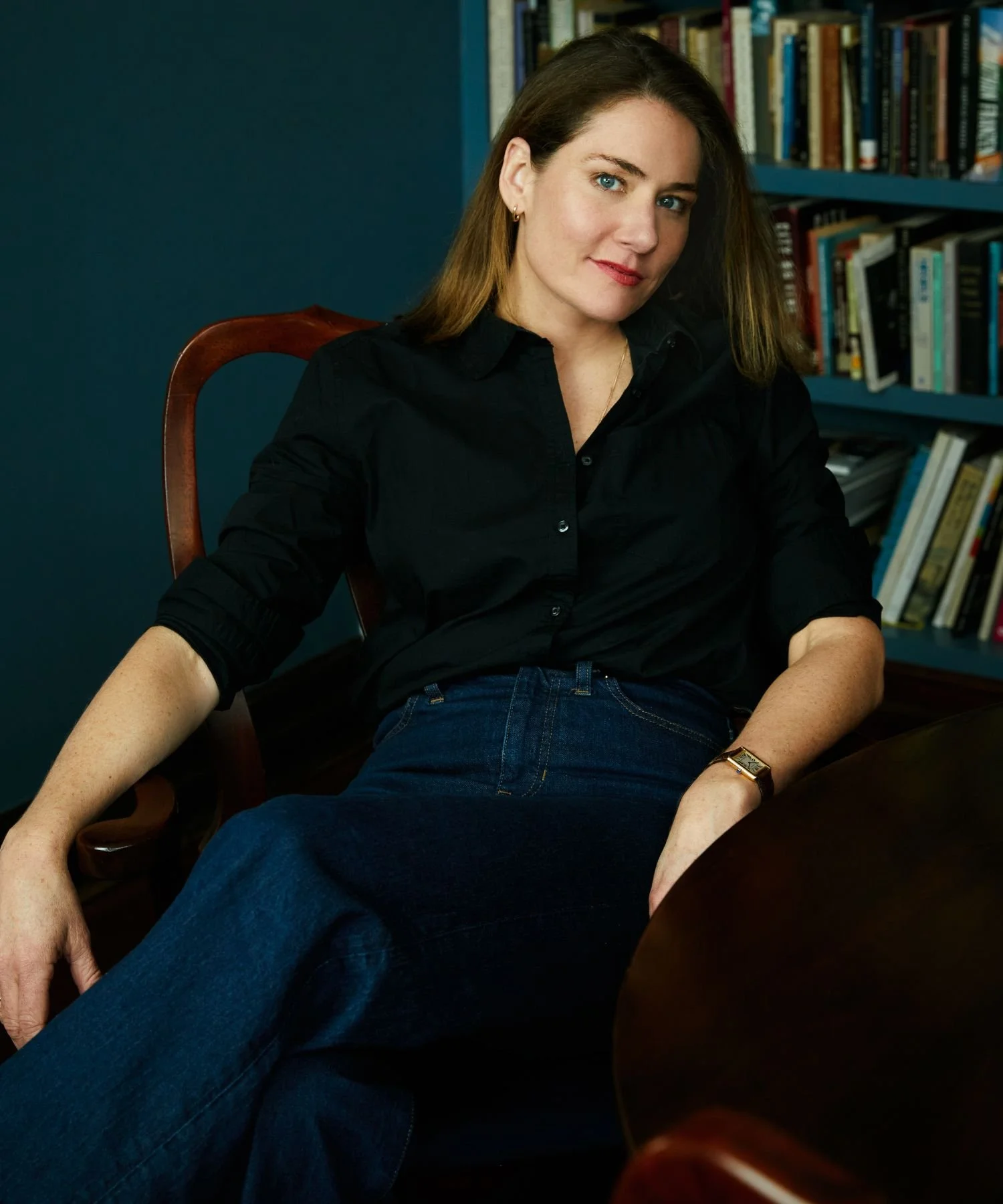
Author Caroline Palmer. Image by Taylor Jewell.
Caroline Palmer knows the inner workings of New York’s glossy magazine world inside out. She began her career at Seventeen in 1999, went on to American Vogue where she ended up spending seven years as editor of Vogue.com from 2007, and later served as Director of Editorial, Video and Social Media at Amazon Fashion until 2020. All this experience she now channels into Workhorse, her debut novel, in which she turns the myth of the “good girl who does good in the end” on its head.
There’s a moment, early on in Workhorse, that lands with a quiet jolt. Not dramatic, not showy—just a line that lingers: deep down, you can’t believe a girl like you made it this far in the first place.
In that one sentence, Palmer doesn’t just describe her character—she exposes a mindset. One that anyone who has ever found themselves slightly out of place in a room they’ve worked hard to enter will recognise.
When I speak to Palmer from her home in New Jersey, that mindset feels familiar. Not overtly—she’s warm, funny, self-aware, fresh from a field trip with her 7th-grader on what is actually her own birthday—but it runs quietly through her story.
Having started out in the fashion cupboards of a London glossy, I recognise the same ambition—and the same unspoken rules—in her experience of New York’s magazine world.
Because long before the book deal, there was a version of Caroline—and a version of me—starting out in an alien world of dress codes, masthead hierarchies of powerful and inspiring women, early mornings and late nights. It’s a world Palmer herself neatly categorises in Workhorse: the workhorses and the showhorses. The grafters and the glide-throughs. Those who hustle to belong—and those who never have to.
The Way In
Palmer grew up in Bucks County, Pennsylvania—“a kind of horsey county outside Philadelphia,” as she puts it—and didn’t set out to work in fashion at all. Writing was always there, but practicality won out. Journalism felt like the viable route: creative, but with a salary.
“If you’re a journalist, then you can write, but also get paid,” she tells me. “I was smart enough to know you can’t just be a novelist—no one is hiring ‘novelist wanted’. So I was trying to think of a job where I could write, be creative in some capacity, and actually get a paycheck. Back then, in the early 2000s, magazines were hiring, newspapers were hiring. I remember sending out a stack of paper CVs to all the big publishing houses and just finding contact names—whatever it took. And that’s how I got my first job at a magazine.”
Fashion, she admits, was never part of the plan.
“Did I intend to be in fashion? Never. It’s shocking to anyone who knew me growing up. But once I got into magazines, I was exposed to this whole new world—it was exciting, and I wanted to stay. At first I thought I wanted to work at The New York Times, and then I did, and realised… maybe not,” she laughs. “It’s always just been a series of what’s in front of me—but always along that path of writing.”
My story mirrors Caroline’s, with slightly less glamour, swapping London for New York, and Marie Claire for Vogue. I arrived in London from Edinburgh in 1997 and somehow found myself in the fashion cupboard at Marie Claire, steaming clothes, running returns, sourcing props (including, memorably, a sofa with legs like a Gucci shoe), and quietly hoping to edge my way into features. Fashion was simply my route through the door. I’d done a joint honours degree in English and International Relations, fully imagining a future as a Kate Adie-style serious journalist.
But that stepping stone? Fashion became my path and it’s been part of my entire career—something my teenage self, all bad hair and even worse clothes, could never have predicted. In that sense, Caroline and I aren’t so different. We both found ourselves in worlds we hadn’t planned for - stayed, adapted, and quietly reinvented ourselves within them.
And perhaps that’s why in Caroline’s book, Workhorse, the protagonist Clo feels so real. Not because she is extreme, but because she isn’t entirely unfamiliar—the ambition, the watching, the learning how to belong. The quiet, persistent feeling that you’ve made it further than you ever expected… and the question of what, exactly, it might cost to stay there. That question, it turns out, was Caroline’s starting point for taking a leap of faith and writing this story.
“I started noticing a pattern in the things I was watching during the pandemic,” Palmer tells me. “Any time a woman was ambitious or did something ‘bad’, she was either the villain—or she had to be softened somehow. She’d be battling addiction, or running from trauma, or something that made us feel comfortable liking her.”
She pauses, then laughs.
“But if you look at male characters, we don’t do that. No one’s asking if we should like them—they just are. So I got really curious about whether you could write a female character who’s ambitious, funny, relatable… and also does increasingly questionable things, without giving her a built-in excuse.”
Clo, she admits, was something of an experiment.
“How far can you push her—and the reader—before they abandon her entirely? Because I don’t know any women who are wholly good. I don’t want to go to dinner with someone who only has nice things to say. I think we all have an edge—it’s just a question of how much of it we’re willing to show.”
Learning the Codes
What Palmer captures with razor precision is the choreography of belonging. The way you learn how to dress, how to speak, how to exist in rooms you were never quite meant to be in.
“You become very aware of how things are done—and then you just do them that way,” she says.
I remember that too. The shift. The subtle shedding of your former self. The moment you realise you’re operating on a different trend timetable to the rest of the world. Palmer describes walking through a shopping mall in her hometown after working at Vogue, confused by how “old” everything suddenly looked. “I was seeing things a year before everyone else,” she laughs.
And yet, her own relationship with fashion is far more considered than you might expect.
“I hate shopping,” she says. “I’m one of those uniform people—black cashmere sweaters, jeans, the same jewellery. I don’t really change. I have black Manolo’s in the three heel heights.”
Perhaps there is a sense that, after those early years of trying to get it right—and often getting it wrong—she’s found her classic comfort zone. A uniform that works for her to feel strong, whatever the situation.
In the book, though, Clo is still honing. Changing into secondhand designer shoes in a New York side street before work. The panic of forgetting to shed the practical boots for vertiginous heels before entering the hallowed halls of magazine land. That quiet humiliation of getting it wrong before even stepping through those glass doors. Or the deeper, more emotional dislocation. When Clo calls home, longing for comfort, for something grounding—and instead feels “unchaperoned in a most dangerous place.”
“That period of life is so displaced,” Palmer reflects. “You’re not comfortable where you’ve been pushed into, and you can’t go back to where you were.”
The Cost of Becoming
In our conversation we talk about the entitlement factor of publishing, particularly fashion publishing. How quickly it takes hold - even for workhorses. How easily it becomes normal.
“You walk into a place and you’re like, it’s me,” Palmer says. “No one’s going to stop me.”
That confidence—earned or assumed—is part of the currency of that world. But what’s interesting is how far it goes. When I ask Caroline if she’s had that moment of ‘yes, that’s me, I have finally arrived’, she laughs: “I think people imagine that moment—I’ve made it, I can finally relax. But no. I don’t feel like that. I cannot wait to arrive. It’s going to be amazing when it happens. I go into every job with a blazing fear in my heart. Every day I’m like, what am I going to do to screw all this up? ”
And that’s where Palmer diverges from her protagonist. Workhorse captures that creeping sense of entitlement—the access, the proximity, the gradual belief that the rules no longer quite apply—Caroline herself never quite loses the edge of uncertainty and she comes across as very real and not in the least entitled.
There’s a moment in the novel when Clo leaves a gala in a borrowed gown with a two-foot train, heading somewhere far less polished, fully aware it will be ruined—and not caring. “Entitlement, it turns out, when encouraged comes with astonishing swiftness.”
That’s the shift. The subtle, almost imperceptible moment when graft becomes access—and access becomes expectation. When you stop asking if you belong and start assuming that you do. Clo leans into that transformation, Palmer stands just outside it—observing, questioning, never quite comfortable. And perhaps that’s why Workhorse resonates so deeply. Because beneath the glamour, the parties, the free clothes and expensed taxis, there’s a quieter truth about ambition. Not just what it gives you. But what it asks in return.
When the Industry Changes
Palmer’s novel is set in the early 2000s—the last golden era of glossy magazines before the digital shift rewrote everything. It’s a world I instinctively recognise. One built on gatekeepers, taste, and a kind of curated authority that feels almost alien now.
“The democratization of the internet has been good on a lot of levels,” she says. “There are people creating genuinely brilliant, funny, intelligent content who might never have had a platform before—and that’s a really positive thing.”
But that all comes with a caveat now.
“I just don’t find a lot of it that interesting,” she admits. “I find it quite depressing, actually. You can lose twenty minutes scrolling and think—what was that? What did I just take in? And a lot of it—like ‘outfit of the day’ or hauls—makes me want to gouge my eyes out.”
What she misses is trust.
“I’m longing for that gatekeeping element you got with magazines,” she says. “For something curated. Somewhere I know I can go and trust what I’m seeing. Somewhere that shows me things I didn’t already know I wanted, in a way that feels considered. There was a point recently where someone sent me something from a newspaper and my first thought was—is this even real? That feeling, of not knowing what to trust anymore, is quite unsettling.”
And yet, she’s not entirely pessimistic.
“I do think there could be a return to that idea of taste-makers,” she says. “Not in the old way, but in some kind of evolved form—something that feels both curated and relevant. I wouldn’t be surprised if something like Hood is the start of that—something that exists online, obviously, but also has a tangible, thoughtful version that makes sense.”
Writing Her Way Through
For Palmer, Workhorse began during the pandemic—a moment of enforced stillness that forced a different kind of reckoning. What followed was discipline. Relentless, unglamorous discipline. Up at 4:15am. Writing before the world—and her three children—woke up.
“I have no idea who that person is now,” she laughs, “I think it helps being older. If I’d tried to write this at twenty-five, I don’t think I could have done it. I cared so much about what people thought of me—it was paralysing. What if they think I’m dumb? What if it’s bad?”
Now, she’s less concerned with perfection—and more focused on actually doing the work.
“There’s a liberation in getting older,” she says: “I was like, you know what—if I don’t write this book, it’s not going to get written. Maybe people will love it, maybe they won’t. Not everyone is going to love it. And I got much more comfortable with that. It was a real blessing. When you’re working for a magazine, it’s never yours. You’re adopting the tone of whatever publication you’re writing for—if it’s Vogue, it’s one thing, if it’s The New York Times, it’s something else. But writing my own book, where it was all mine and I was the brand, so to speak—that was super liberating.”
More than that, it changed how she sees writing altogether.
“I thought I might feel untethered without those guardrails,” she admits. “But it was the opposite. It was a total, liberating delight. To not have rules, not have a way of doing things—for it to just be mine.”
A Mirror, Not a Fantasy
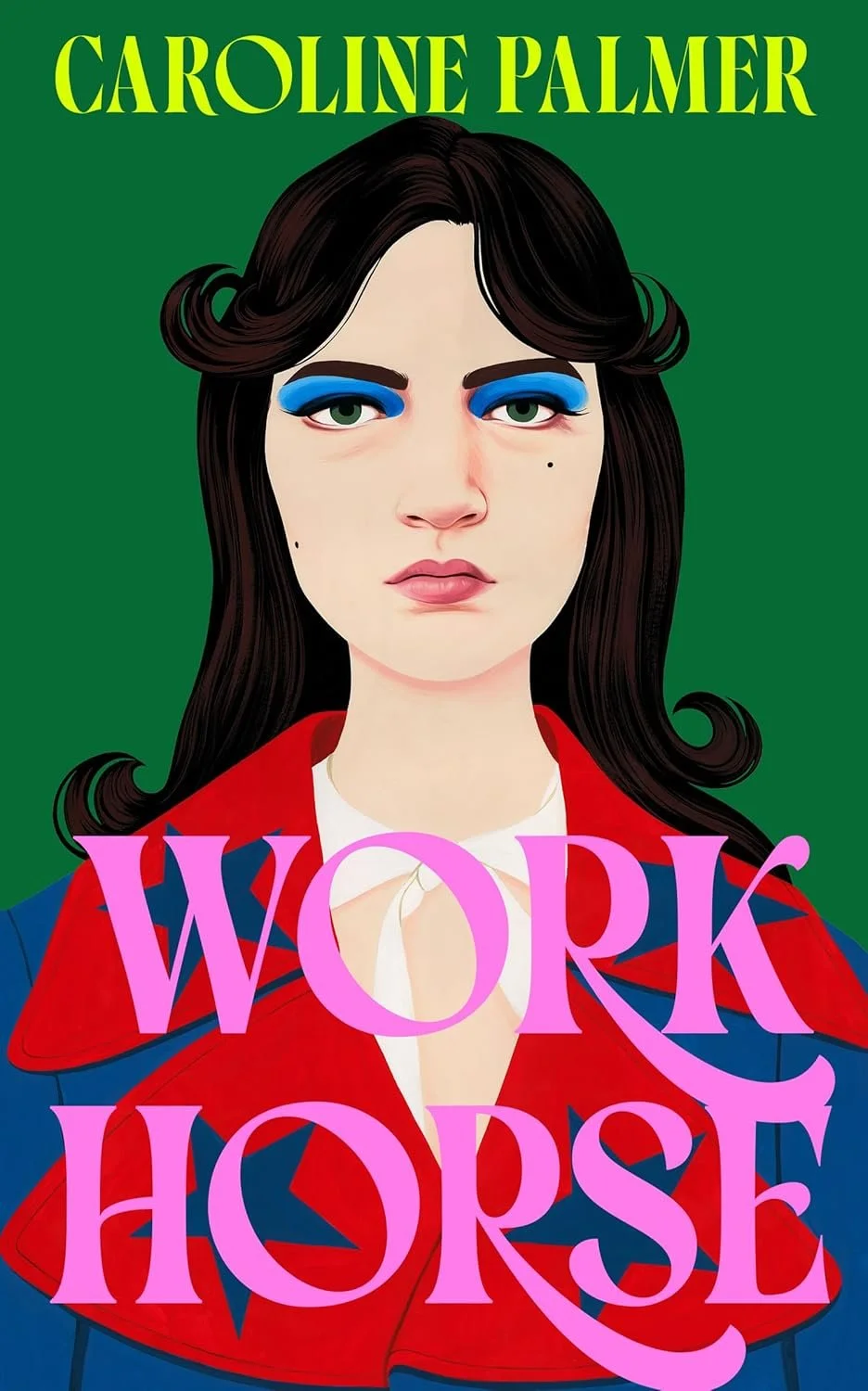
Now out in the world, Workhorse has been compared to The Devil Wears Prada with a touch of The Talented Mr Ripley mixed in. And yes, the parallels are there.
I’m only halfway through (I’ve only had the book for two days and I’m racing through it), but already the tone is shifting—the darker edge beginning to creep in. As Clo, the ambitious workhorse, edges closer to the gilded world of Davis—the ultimate showhorse—there’s a distinct Talented Mr Ripley energy to it. And honestly? Eek.
But where those stories gave us a heroine we could root for without question or a clear villain, Palmer gives us something far more interesting. A protagonist who feels true. Who makes us uncomfortable. Who reflects something back at us we might prefer not to see. The truth is, there’s a little bit of Clo in all of us. The ambition. The envy. The desire to belong. The willingness—at times—to bend the rules to get there. And maybe that’s why this novel hits so well. Not because it shows us a world we aspire to. But because it shows us, with unnerving clarity, what it might take to stay there.
Long after the parties, the fashion cupboards and the borrowed identities, what remains isn’t the glamour—it’s the question. Not whether you can make it in a world like this, but who you become once you do.
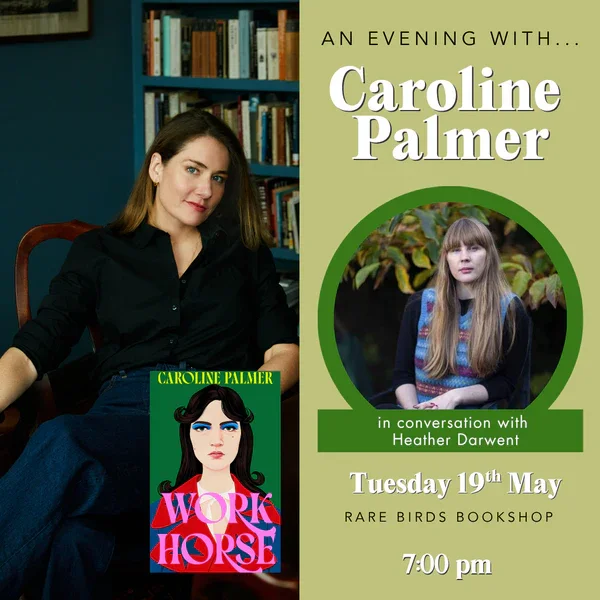
Caroline Palmer will be in Edinburgh for an evening at Rare Birds Book Shop, in conversation with Heather Darwent—I’ve already got my ticket. See you there.