
Stevie Blake of Monto & Perri: Coming Home, on His Own Terms
By James McLaren
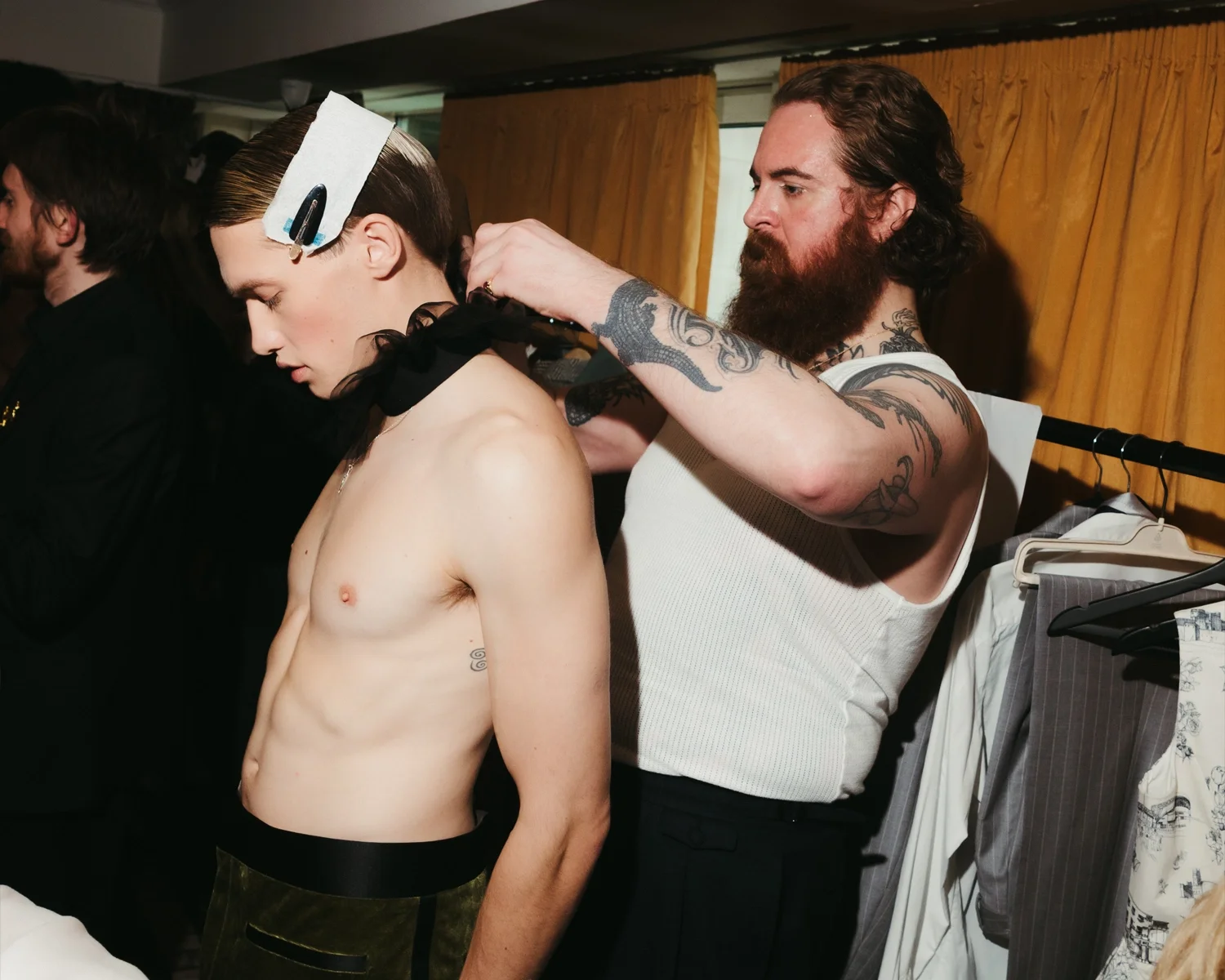
Stevie Blake backstage at the Irish Roots Show.
Image Credit: Guilherme Resende & Edgar Camargo @guilhermertds
From preparing his own collection for Ireland Fashion Week to seeing Coco Rocha wear his designs at the Irish Roots show, Stevie Blake is carving out a distinctive place in Irish tailoring. A day before the showcase, James McLaren, Creative Director of Manhood, sits down with the designer behind Monto & Perri to discuss creative independence, character-led design, and why a suit should never be taken too seriously.
There is a particular confidence in knowing what something should look like, even when the reality in front of you has yet to catch up. For Stevie Blake, the designer behind Monto & Perri, that instinct is central to the process. A jacket can spend months existing as an idea before becoming something tangible, and even then, it might take a pair of scissors and a moment of conviction to get it right.
Coco Rocha modelled Monto & Perri at the opening of the Irish Roots show at St Helen’s Hotel in Dublin, placing Blake’s work within a wider celebration of Irish design. However, behind the clothes is a more personal story: a designer determined to build something on his own terms, at home, rather than follow a well-worn path elsewhere.
Ahead of the Ireland Fashion Week showcase, we sat down with Blake to discuss the theme of Coming Home, the four-look-collection taking shape in his studio, and the importance of creating a world that feels entirely his own. From the pages of his notebooks to the final cut of a jacket, his approach to tailoring is as much about character and community as it is about craftsmanship.
bringing an idea to life
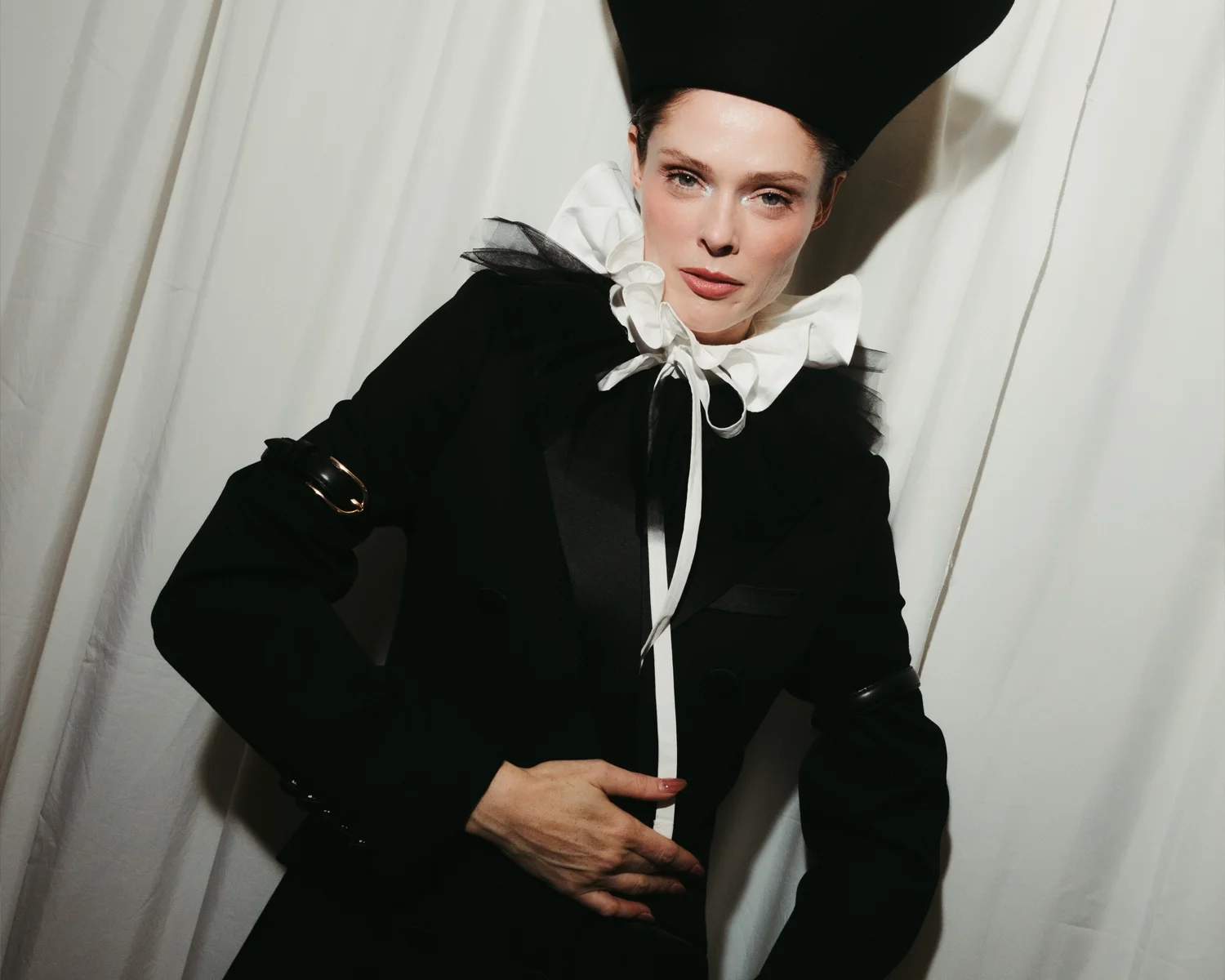
Coco Rocha opening the Irish Roots Show in Monto & Perri.
Image Credit: Guilherme Resende & Edgar Camargo @guilhermertds
JM: You’re showing at Ireland Fashion Week, with fittings and final preparations underway. How are you feeling about the collection?
SB: I feel pretty good. I’m confident in what I’ve worked on, and I’m happy with what I’ve created so far. I think the collection is strong.
I haven’t had much time to think about the show itself, though. I haven’t seen the looks on the models yet, so that will be the moment when everything really comes together. I’ve put each look on a mannequin or a person individually, and I’ve been happy with the results. But seeing everything come to life on the models will be different.
It’s strange to think about the journey a piece takes. Initially, it’s just an idea in your head. Then it goes into a notebook, onto paper, into cloth, and eventually becomes something real.
JM: You mentioned making some last-minute changes to one of the jackets. How do you know when a piece is finished, or when something still needs to change?
SB: There’s a jacket behind me that originally had quite long tails. I’d been thinking about that jacket for ten months or a year, and I knew exactly what I wanted it to be. But when I looked at it last week, something wasn’t right, so I cut the tails off.
For a moment, I thought, “Oh, fuck.” But I went with my gut, and it ended up being exactly what I’d imagined. When I finally got it right, it was just that feeling of, “Boom. That’s it.”
I probably need to put the scissors down for a while after this week.
the meaning of Coming Home
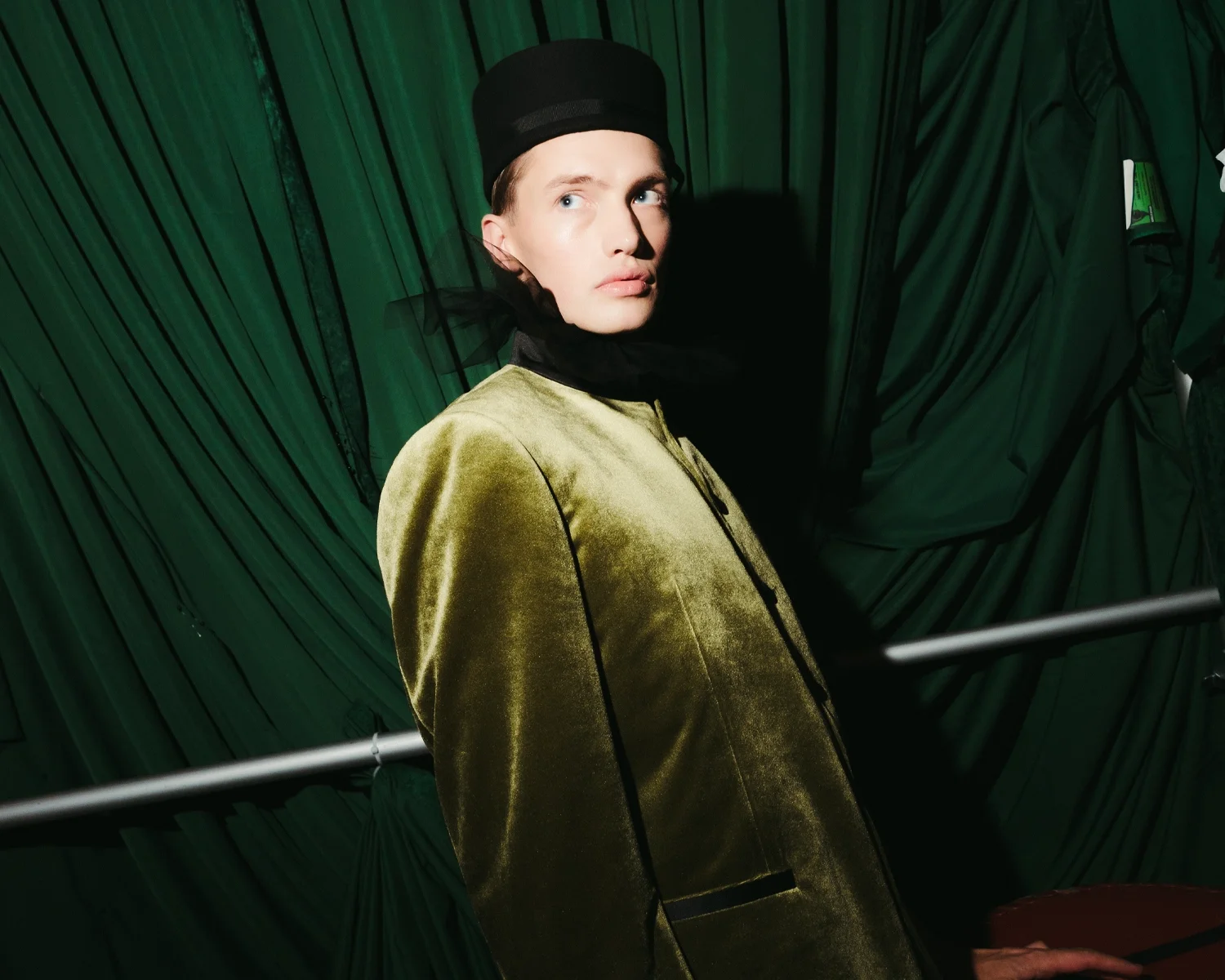
Bellboy inspired look backstage at the Irish Roots Show.
Image Credit: Guilherme Resende & Edgar Camargo @guilhermertds
JM: The collection is being presented under the theme Coming Home. How did that idea translate into your designs?
SB: We were told that the show would explore Ireland’s hospitality and how welcoming people here are. It is also about bringing Ireland’s creatives back and creating an environment where people can build something for themselves.
The way I design is to create a character for each look. Sometimes that character is based on someone I know; other times, I invent them entirely. I think about who they are, how they would dress, and where they might go. Each look becomes a character from a part of my mind.
That approach helps me think about the whole picture, from the clothes themselves to casting and photography. It makes everything feel connected.
The theme really resonated with me because part of the reason I chose to establish myself here was that I didn’t want to contribute to the problem of creatives feeling they had to leave Ireland to progress. I wanted to be part of building something here, in my own city.
JM: There is a wider conversation around creative talent leaving Ireland for places such as London, Paris and New York. Was staying and building your own business a conscious decision to do things differently?
SB: Absolutely. A lot of creatives in Dublin and around Ireland end up going elsewhere because they feel there aren’t enough opportunities to progress here.
I had an opportunity to work on Savile Row, but I turned it down because I realised that, ultimately, I would be working towards someone else’s vision rather than my own. The only way I was going to do what I wanted to do was to do it myself.
So I decided to stay.
That’s why the theme of Coming Home felt particularly relevant to me. I started developing Monto & Perri around two and a half years ago, and I’ve been working from my current studio space for about a year. For this to be the theme of the show when I decided to take part in a fashion showcase felt like a natural connection.
I want to contribute to a creative environment where people can build their own thing rather than feeling they have to leave to make it happen.
building an identity
JM: Monto & Perri has a distinctive visual identity. Where did the name come from, and how did the brand begin?
SB: The name came to me in a dream. I’d been out with friends, got home at around four in the morning, and fell asleep. I woke up at quarter past five after a really vivid dream that I had a T-shirt printing company called Monto & Perri. I wrote it on the back of a notebook.
That was four years before I decided to go into fashion.
I’ve always carried a notebook with me, so every time I finished one and started another, I transferred the name across. Then, when I was in college and we were told to set up websites and Instagram pages, I knew I didn’t want to use my own name. I couldn’t think of anything else, so I went with the name I’d been carrying around for years.
JM: The brand’s imagery feels cohesive without being overly polished. There’s a clear visual world to it. How important is that sense of identity to you?
SB: I really appreciate that. One of the things I’ve struggled with online is feeling that everything looks too similar. I would look at something I’d posted and think I’d already done it, or wonder how I could approach it differently.
But realistically, the visual identity comes from things that resonate with me. The orange and brown tones, for example, are simply colours I like. If I built a house, it would probably look quite similar to my studio space now.
I’ve come to realise that consistency is a good thing. It’s part of who I am, rather than something I need to keep changing for the sake of it.
Taking part in Ireland Fashion Week has also made me realise that I haven’t been designing for myself as much as I’d like to. When you’re trying to build a business, establish a studio and keep everything moving, your own creative work can take a back seat.
I want to get back to putting more of myself into the work. Ultimately, I design for myself and nobody else…unless they’re paying me to.
tailoring without convention
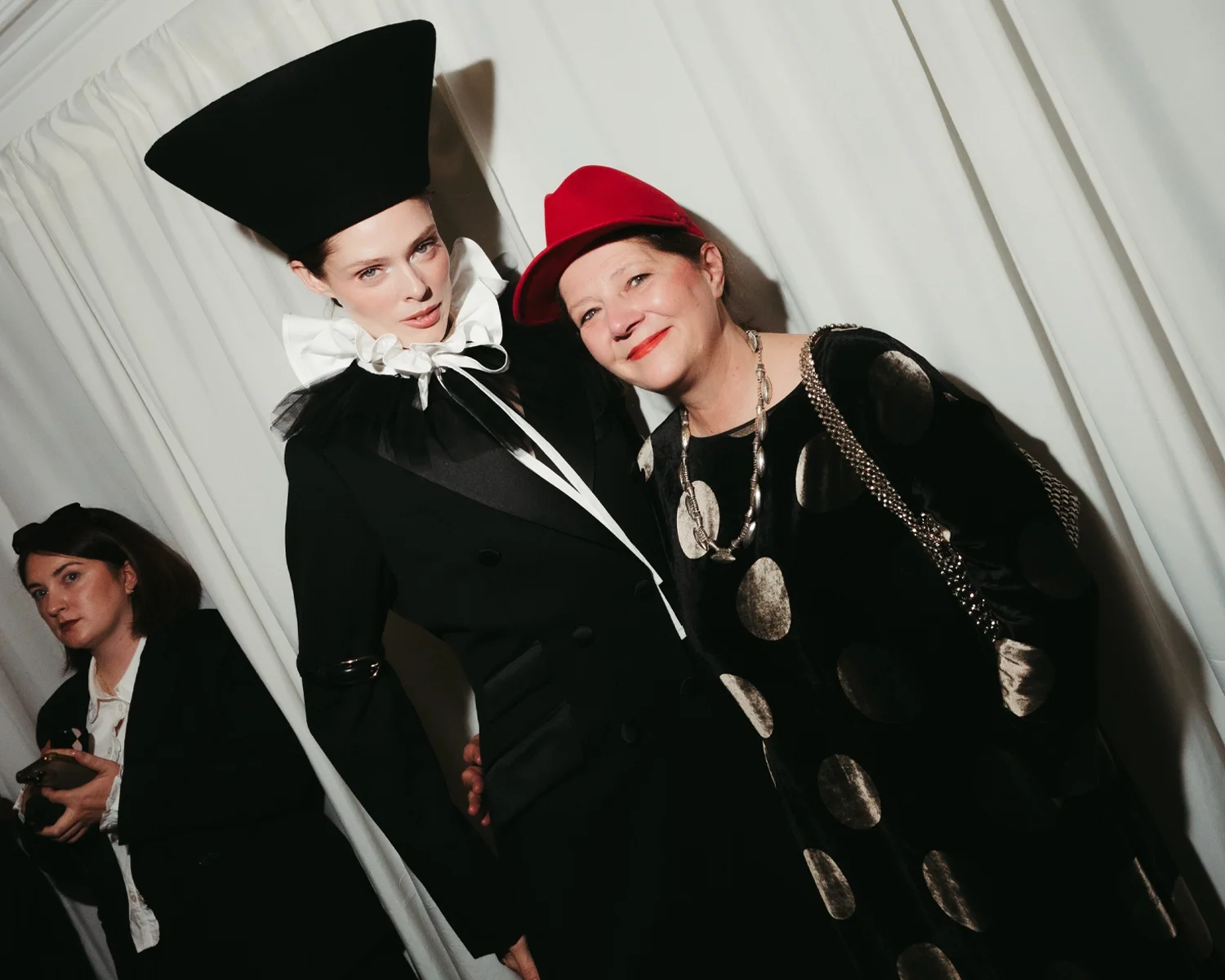
Coco Rocha and Lina Stein backstage at the Irish Roots Show.
Image Credit: Guilherme Resende & Edgar Camargo @guilhermertds
JM: Ireland Fashion Week brings together some of the country's established tailoring names. What did you want your own contribution to say about the possibilities of contemporary suiting?
SB: Being part of the show is huge, and leading it is even bigger. I wanted to make a point of doing something that felt more like me, rather than presenting generic suiting.
I wanted to showcase my strengths through pieces that are a little more out there. I wouldn’t necessarily call it avant-garde, but I wanted my personality to come through while still working within the language of tailoring.
There’s a lot of structure to a suit, and you can’t change everything. There’s a reason so many suits look similar: the traditional construction works. If you step too far outside those conventions, it doesn’t always work.
But finding those little pockets where you can introduce your own identity is the fun part. It’s about understanding the rules well enough to know where you can push them.
JM: Your approach seems to consider the complete outfit rather than individual garments. Does that extend to the styling and accessories?
SB: Definitely. I’m quite particular, and I suspect I’ve been a bit of a nightmare for the stylist, Anne, although she says it’s been fine.
When I design, I tend to create the whole look rather than just a jacket or a single piece. I want to understand how everything works together. I find it difficult to imagine a garment in isolation because I’m thinking about the character wearing it and the world they inhabit.
For this collection, I collaborated with Lina Stein to make five hats. It’s something I’d wanted to do for a while. In previous designs, I’d often imagined a hat or headpiece as part of the look, but I’d never fully followed through with it. Being able to bring that idea to life has been great.
Shoes might be the next step.
JM: It sounds as though each collection is an opportunity to develop that world a little further.
SB: I hope so. I want the clothes to feel like they belong to someone, rather than existing as individual pieces. The styling, the accessories and the person wearing them all contribute to that.
dressing for the occasion — and creating one
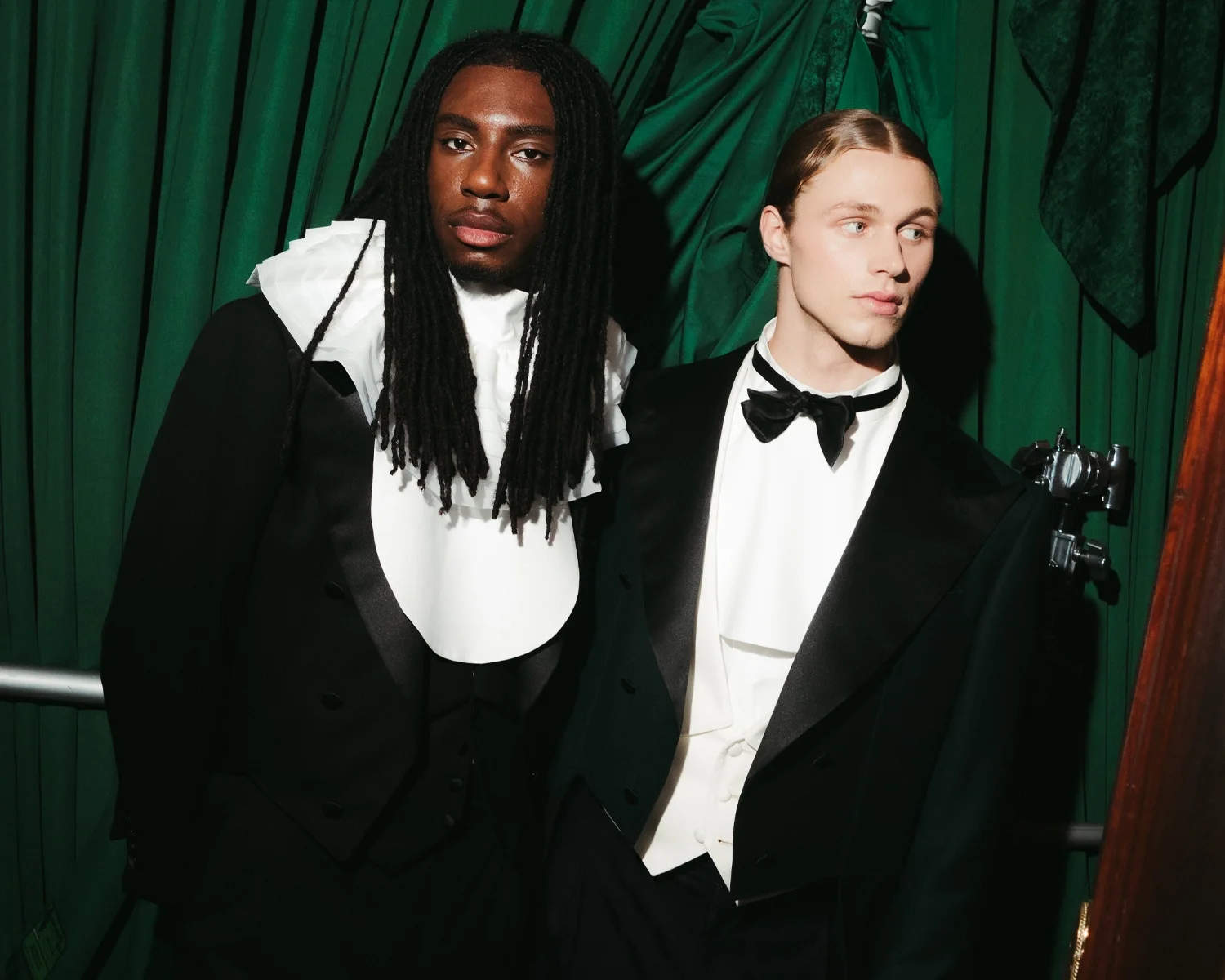
Monto & Perri Models backstage at the Irish Roots Show.
Image Credit: Guilherme Resende & Edgar Camargo @guilhermertds
JM: You also use photography to build out the world around the clothes. Why do you prefer working with friends rather than relying entirely on professional models?
SB: I find it more comfortable, and I think they do too. Models are fantastic, but I like people to be able to have a conversation and relax. I want the images to feel natural.
For our first shoot, three years ago, we photographed my graduate collection at a place in West Cork. Most of the people involved weren't models; they were friends of mine who hadn't necessarily met each other before.
I knew they would get along, so we brought everyone together at Inishbeg, where we stayed the night before. We spent the evening getting to know each other over wine, and by the following day, everyone was comfortable enough for us to shoot.
That sense of ease makes a difference. I like the idea of bringing people together through the clothes, rather than making everything feel too formal or staged.
JM: That sense of community seems closely connected to the characters you design for. Who do you imagine wearing Monto & Perri?
SB: I imagine people wearing the clothes somewhere fun. Perhaps at a party, or an event where they want to get dressed up. For that first shoot, we were thinking about where you might find yourself at four in the morning at a party.
There was wine and food everywhere, and the atmosphere changed as the day went on. We shot some images before dinner, but the later part of the evening had a different energy.
People become more comfortable with each other over time. By the end, you can leave with more friends than you arrived with. That was part of what I wanted to communicate.
I don't think getting dressed needs to be so serious. Clothes should make you feel good and special, but you should also be comfortable in them. They don't need to be pristine.
With suiting, people often think you can only wear a suit to a formal or organised event. But you can wear one wherever you want. You can wear it to the shops if you feel like it.
Do whatever you want.
Casualise tuxedos again, you know?
Coming home, looking forward
For Stevie Blake, Coming Home is more than a collection theme. It speaks to the decision to stay, to develop a practice on his own terms, and to find room for individuality within one of menswear’s most established traditions. From Coco Rocha wearing Monto & Perri at the Irish Roots show to Blake preparing his next editorial fashion shoot, the label is part of a wider conversation about the visibility and future of Irish design.
At Monto & Perri, tailoring is approached as a way of expressing character rather than simply meeting a dress code. Blake is building a creative world through photography, styling, collaboration and the people who bring his ideas to life. The ambition is clear, but so is the attitude: make the clothes personal, find your own way of doing things, and never let the rules of dressing get in the way of enjoying it.
After all, if a suit can take you from the first drink of the evening to four in the morning, perhaps it was never meant to stay on a hanger.