Sézane, But Different: Discover the New Direction for the French Fashion Brand
Morgane Sézalory built a global fashion success story around an irresistible version of French femininity. Now she wants the brand to change with her.
Sézane wasn’t broken and certainly didn’t need rescuing. So when its founder announced that, as she entered her forties, her tastes had evolved and Sézane would too, we were paying attention.
Most of us have something Sézane in our wardrobes. I’ve long been a fan of the knitwear: comfortable, beautifully made and usually with a clever detail that sets it apart. The jewellery has been another weakness. I have a gold medallion necklace that rarely makes it through an outing without somebody asking where it’s from.
But somewhere along the way, I began to wonder whether Sézane was still talking to me.
When the brand came to Scotland last year, the guest list told its own story. Beautiful, glossy influencers with flawless skin and shiny hair were wined and dined, while we editors didn’t even know Sézane was in town. It felt like a brand focused firmly on the late-twenties market, and I assumed this particular love affair had run its course.
So I can’t say my interest wasn’t piqued when Morgane Sézalory announced that things were changing.
A Founder Who Changed – And Said So
Morgane had turned 40 and, rather than pretending to be the same woman who’d founded the label in her twenties, began talking openly about how her outlook and desires had evolved. Growing older, she wrote, meant listening to herself and accepting she was not the person she’d been five, nine or 15 years earlier. She could still love what she’d built while wanting to reveal different dimensions of it.
More unusually, she wanted the brand to evolve with her.
Suddenly, at 51, I felt included again.
That’s what makes this new chapter more interesting than a new logo, campaign or collection. This is a hugely successful founder looking at a formula that demonstrably works and deciding to change it anyway, not because women have stopped buying Sézane, but because she has changed herself.
Since launching in 2013, Sézane has become extraordinarily good at being Sézane. Morgane built the label from Les Composantes, her earlier vintage project, into one of France’s most recognisable contemporary fashion exports, and it came to practically own a corner of our wardrobes: romantic blouses, excellent cardigans, feminine dresses, good denim and that slightly whimsical Parisian styling that looked special without feeling unwearable.
Women clearly wanted it. Which makes the decision to interfere with the formula all the more interesting.
Some founders might have introduced the changes gradually and hoped loyal customers barely noticed. Morgane did almost the opposite. Before revealing the new collection, she’d already spoken publicly about entering her forties, changing herself and wanting to show another side of Sézane. Rather than dressing up an evolution as the usual seasonal refresh, she told us to expect one. It takes nerve to do that when customers are already happily buying what you make.
So, What Does New Sézane Look Like?
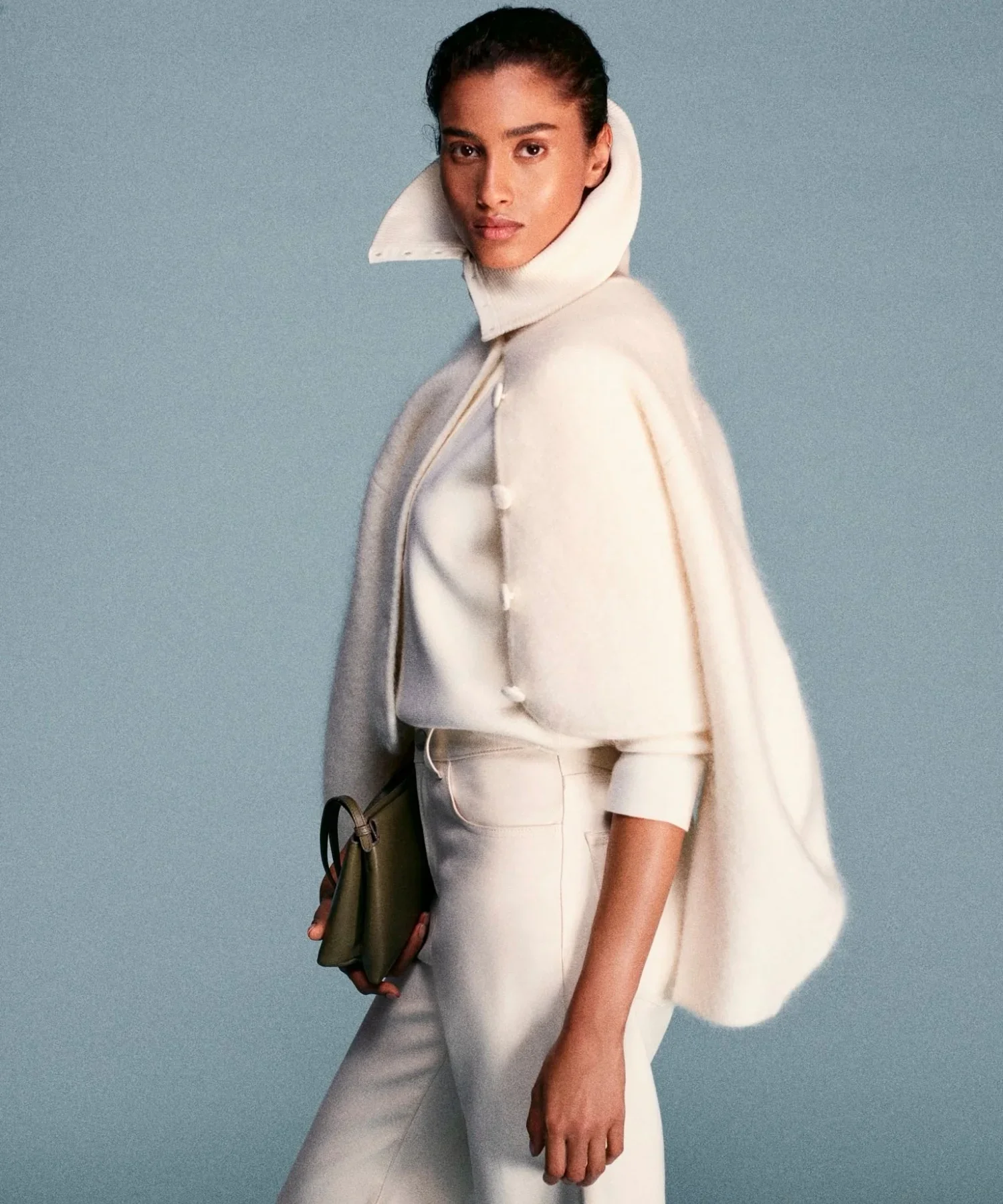
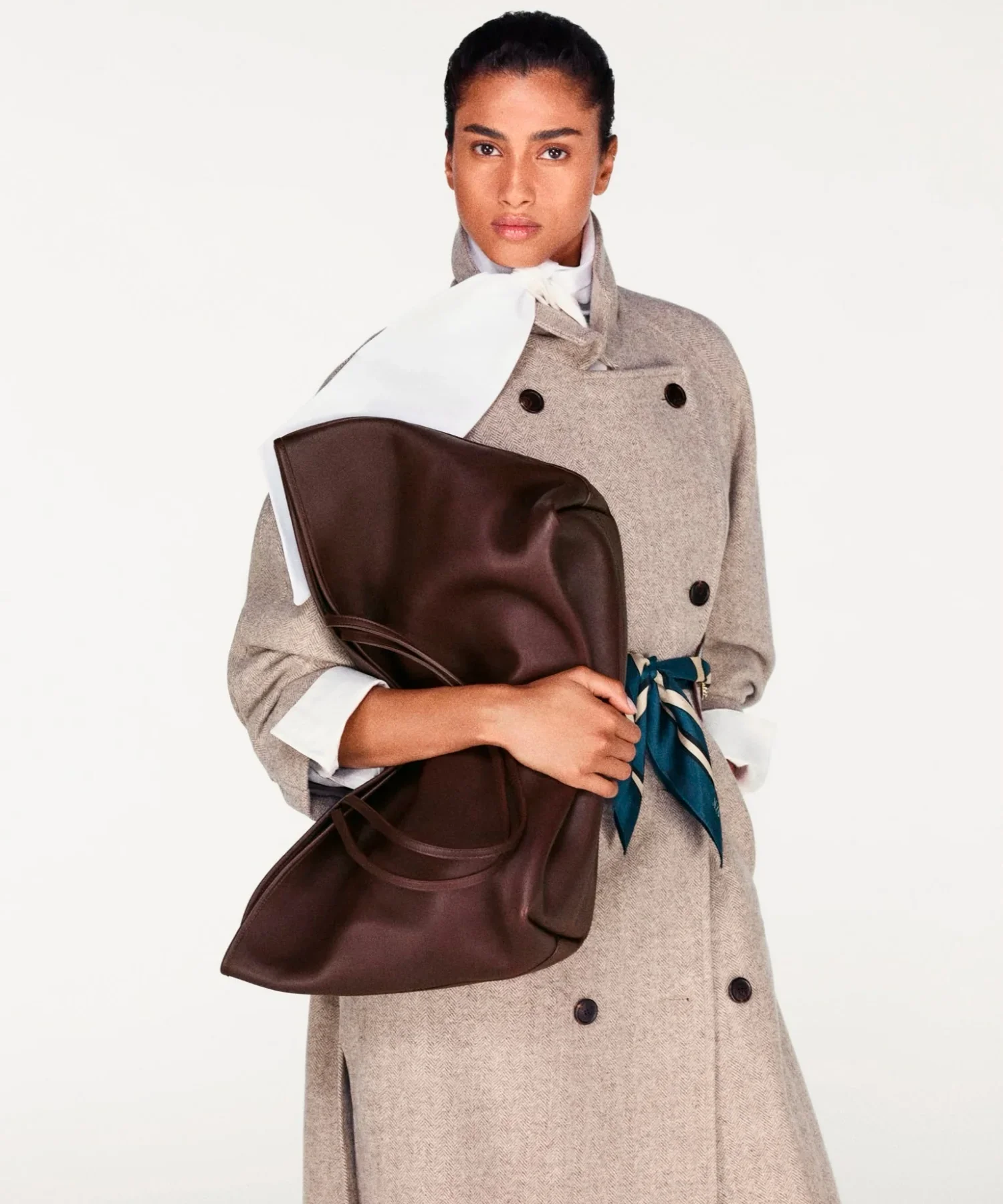
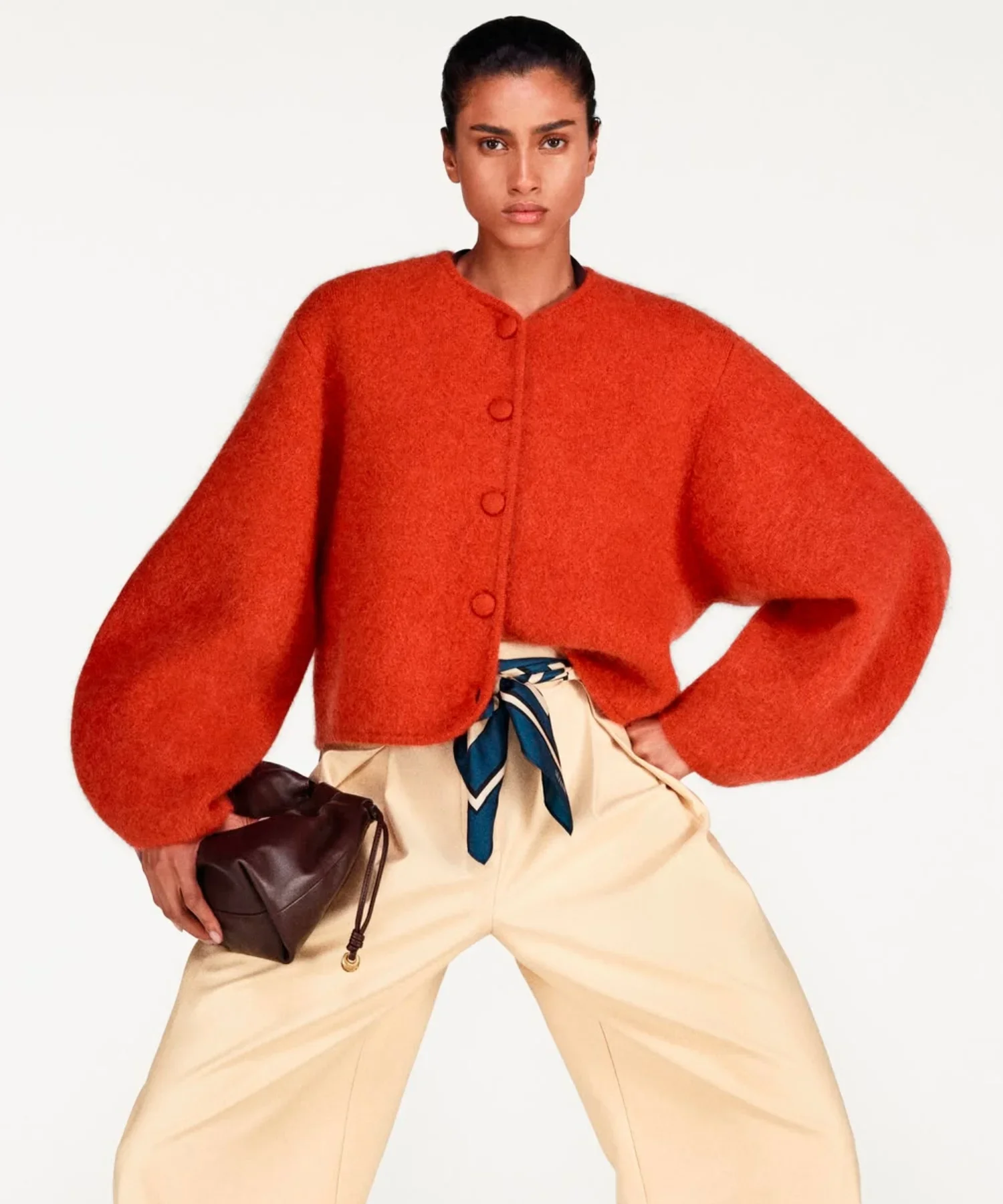
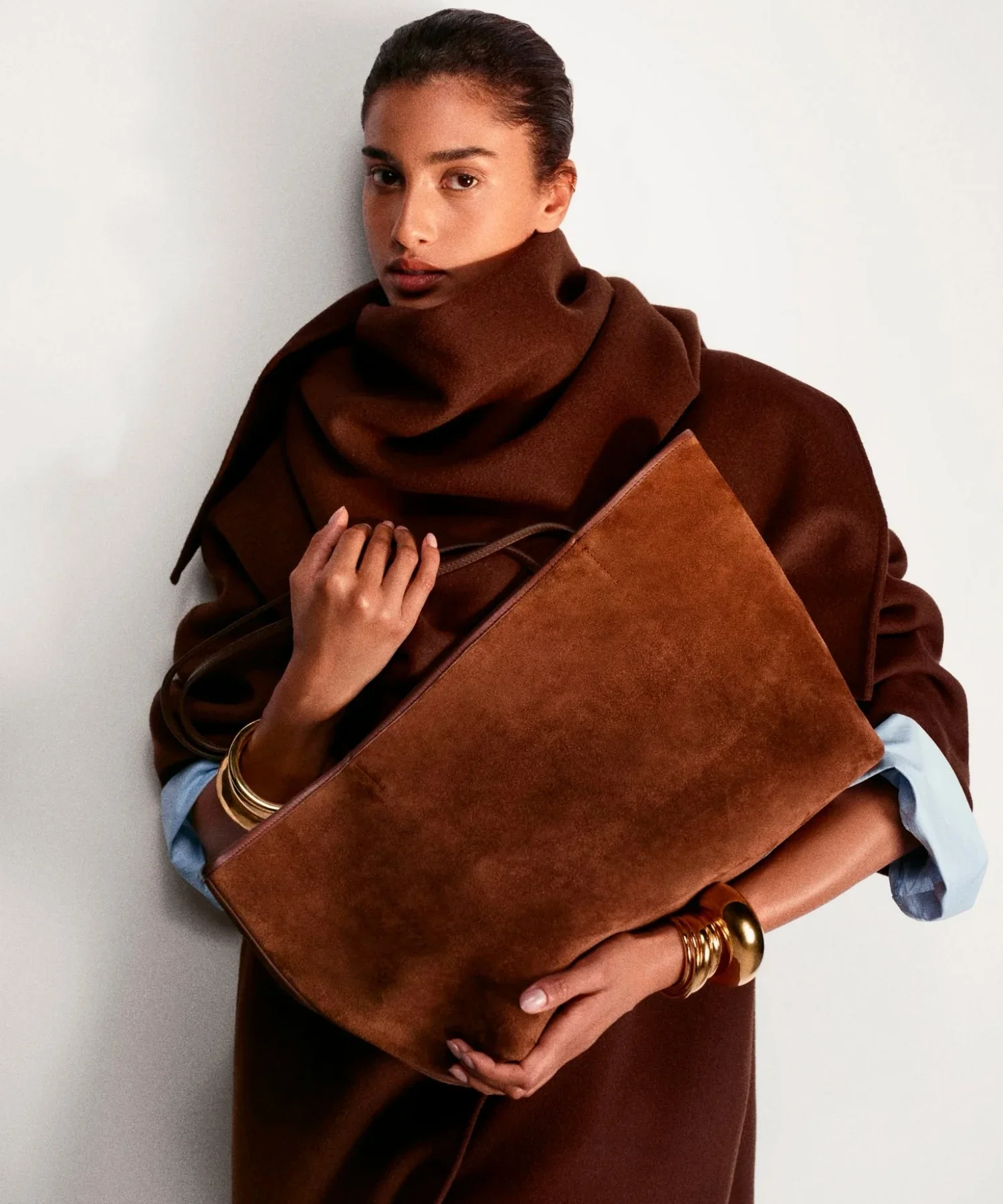
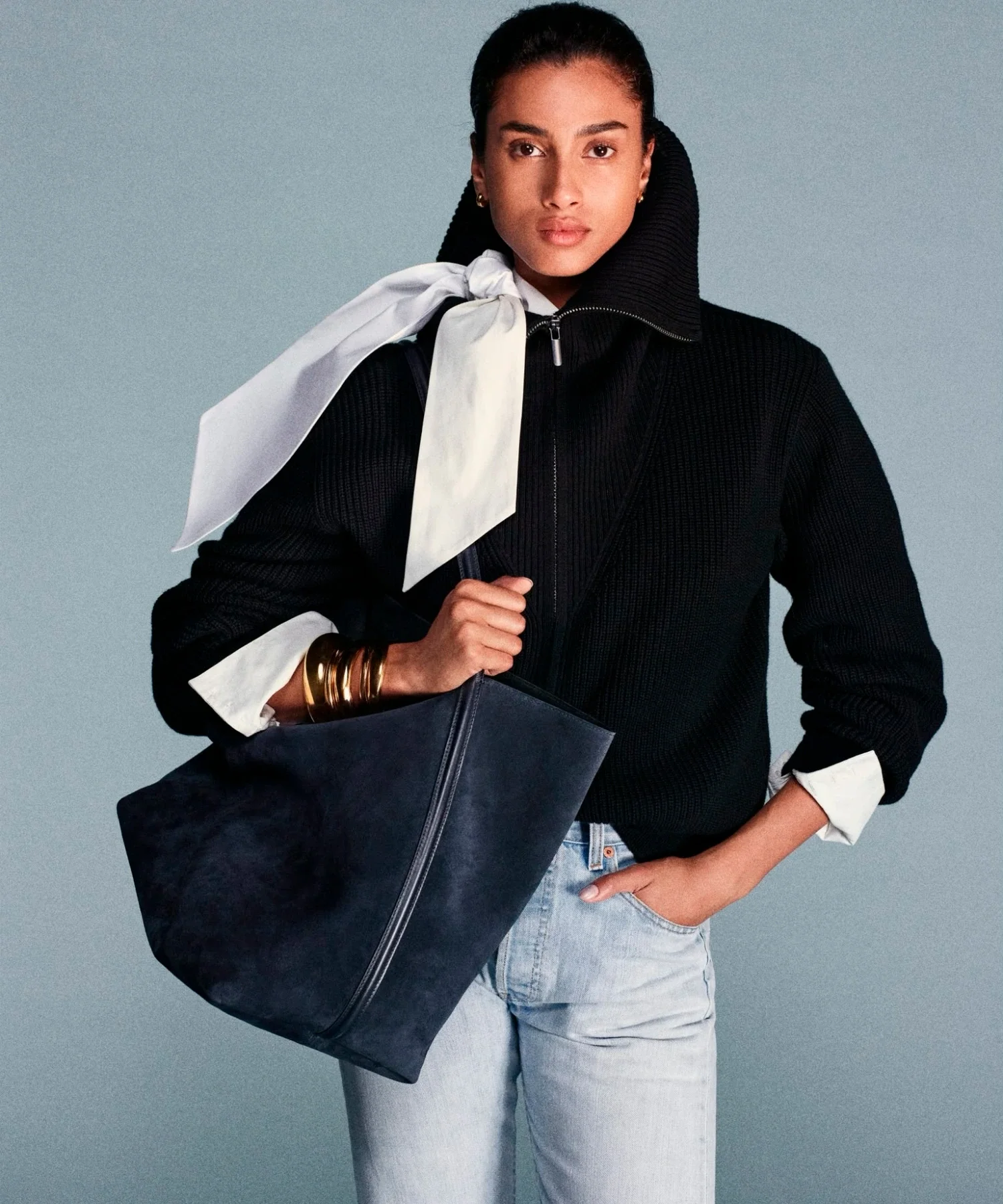
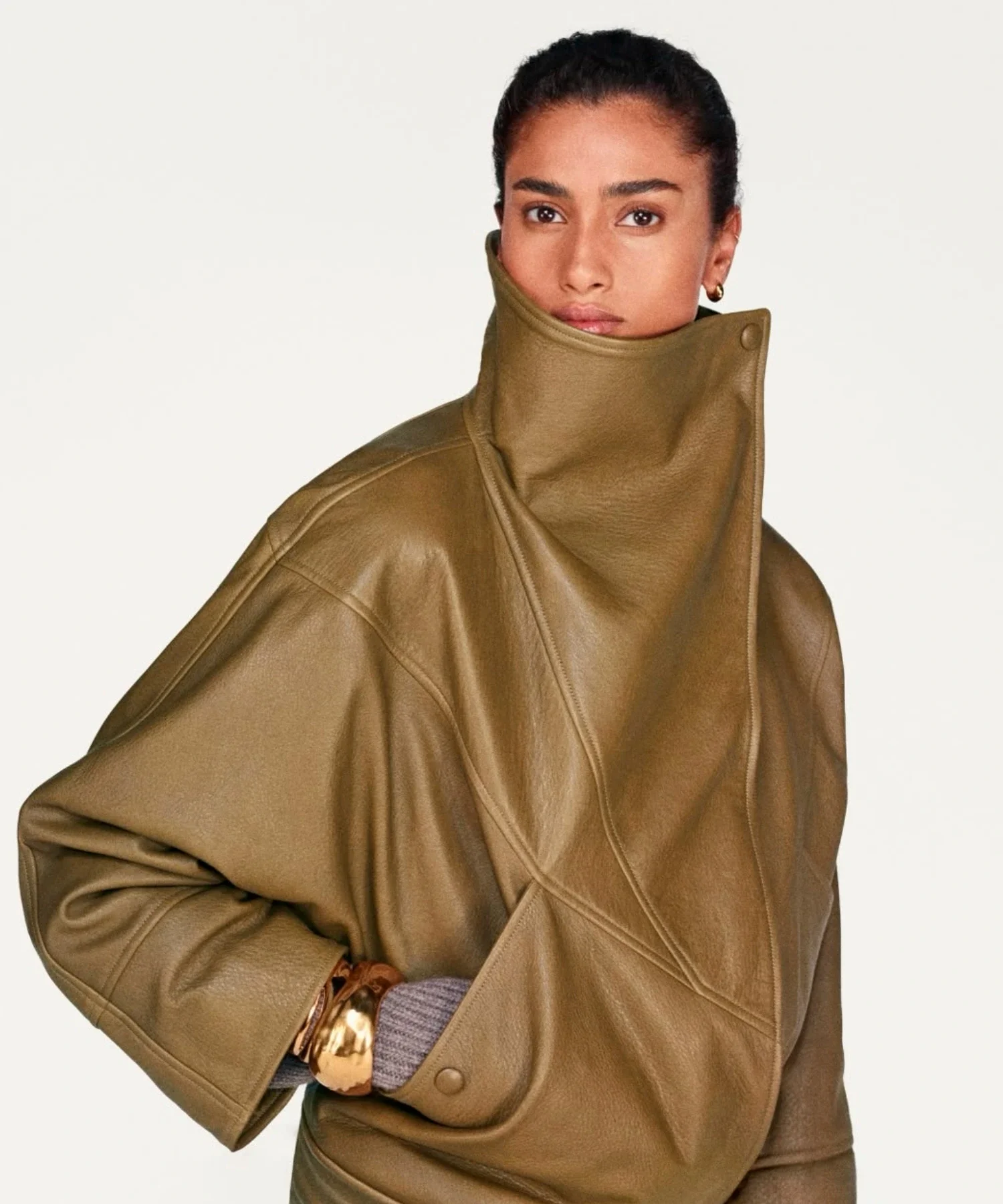
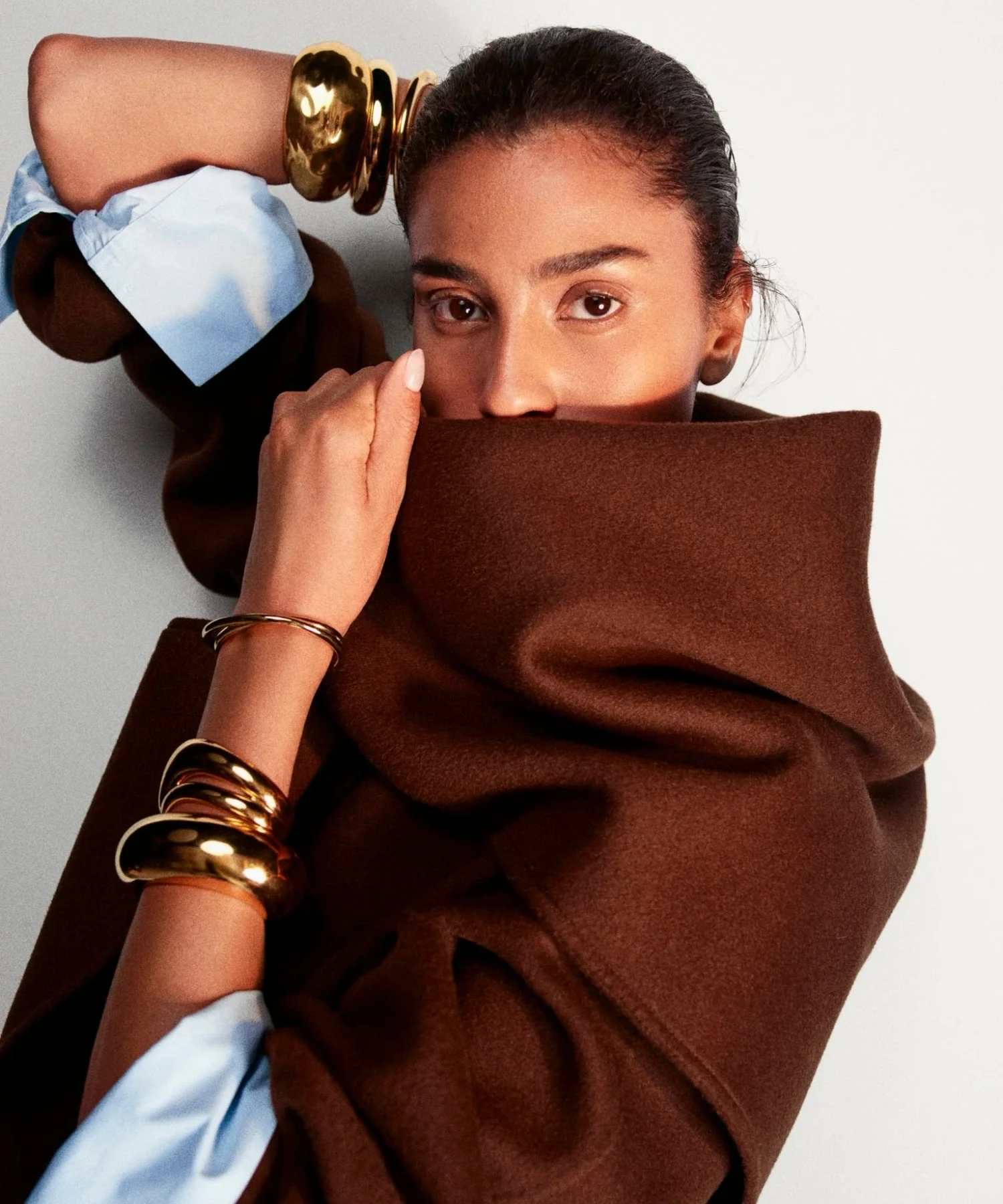
Now we can see what she meant. The new Sézane remains recognisable, but the mood has shifted. The romanticism hasn’t disappeared, nor should it, but there’s more strength to the clothes: sleeves swell from cropped jackets, collars rise around the face, leather turns oversized and scarves take on exaggerated proportions. The textures feel richer, the silhouettes stronger, the overall effect rather less sweet.
The new Autumn 2026 campaign reinforces the shift, with Imaan Hammam fronting the imagery, photographed by Mark Kean and styled by Alexandra Carl, as part of a wider refreshed visual identity.
It would be easy to call this Sézane growing up, but that misses the point. There was nothing juvenile about what came before, and this shouldn’t become another conversation about women reaching 40 and deciding it’s time to dress more seriously. If anything, Morgane seems to be arguing the opposite: that getting older gives you greater licence to trust your own taste.
Why Change a Winning Formula?
There’s a commercial question here too. Fashion brands spend years trying to establish a recognisable identity. Find the thing women love, own it, then sell them another version next season. But success creates its own trap. The more identifiable a look becomes, the easier it is to imitate.
Sézane’s particular combination of romantic blouses, decorative knits, vintage-inflected prints and distinctly French styling became so recognisable that versions of it inevitably began appearing elsewhere. Once an aesthetic is sufficiently familiar to be copied at every price point, the very thing that made a brand distinctive can start to feel ubiquitous.
That leaves a successful brand with an awkward choice. Keep giving customers precisely what they came for and risk becoming predictable, or move the aesthetic forward and risk leaving some of them behind.
Sézane’s evolution starts to look less like interfering with a winning formula and more like protecting what made the brand interesting in the first place.
Perhaps Morgane understands that particularly well because Sézane was never conceived as some immaculate corporate proposition. It grew organically from her love of vintage, and she has repeatedly described instinct, conviction and the willingness to change as central to how she works. Now she appears prepared to trust those instincts again, with considerably more at stake.
The Sézane Woman Has Changed Too
There’s another part of this that fashion sometimes forgets: the customer has changed too.
The woman who discovered Sézane in 2013 has lived another 13 years. She may have a different job, different priorities and a different idea of what she wants from her clothes. She might still love the cardigan, as I certainly do, but she might also rather fancy the enormous leather jacket.
Our femininity doesn’t disappear as we age. It evolves.
That’s what I find most convincing about the new clothes. There’s still romance, but it now sits alongside structure, volume and strength. The woman wearing them hasn’t abandoned prettiness; she simply seems less defined by it.
Will Sézane’s Customers Come With Her?
There’s risk involved, of course. Some customers will want Sézane to remain exactly as they found it, and when you’ve become shorthand for a particular kind of French femininity, even a subtle shift can feel significant.
But maintaining the greatest hits indefinitely carries a risk of its own. Fashion loves reinvention when something has gone wrong: falling sales, waning relevance, a newly installed creative director. Choosing evolution while the thing you created is still enormously successful is rather more compelling, especially when the catalyst is simply a woman trusting herself.
Morgane created Sézane in her twenties. She entered her forties, realised she had changed and decided the company didn’t need to preserve an earlier version of her just because that version had proved commercially successful.
Whether every Sézane customer chooses to come along remains to be seen.
I, for one, am interested again.
The New Looks We Love At Sézane